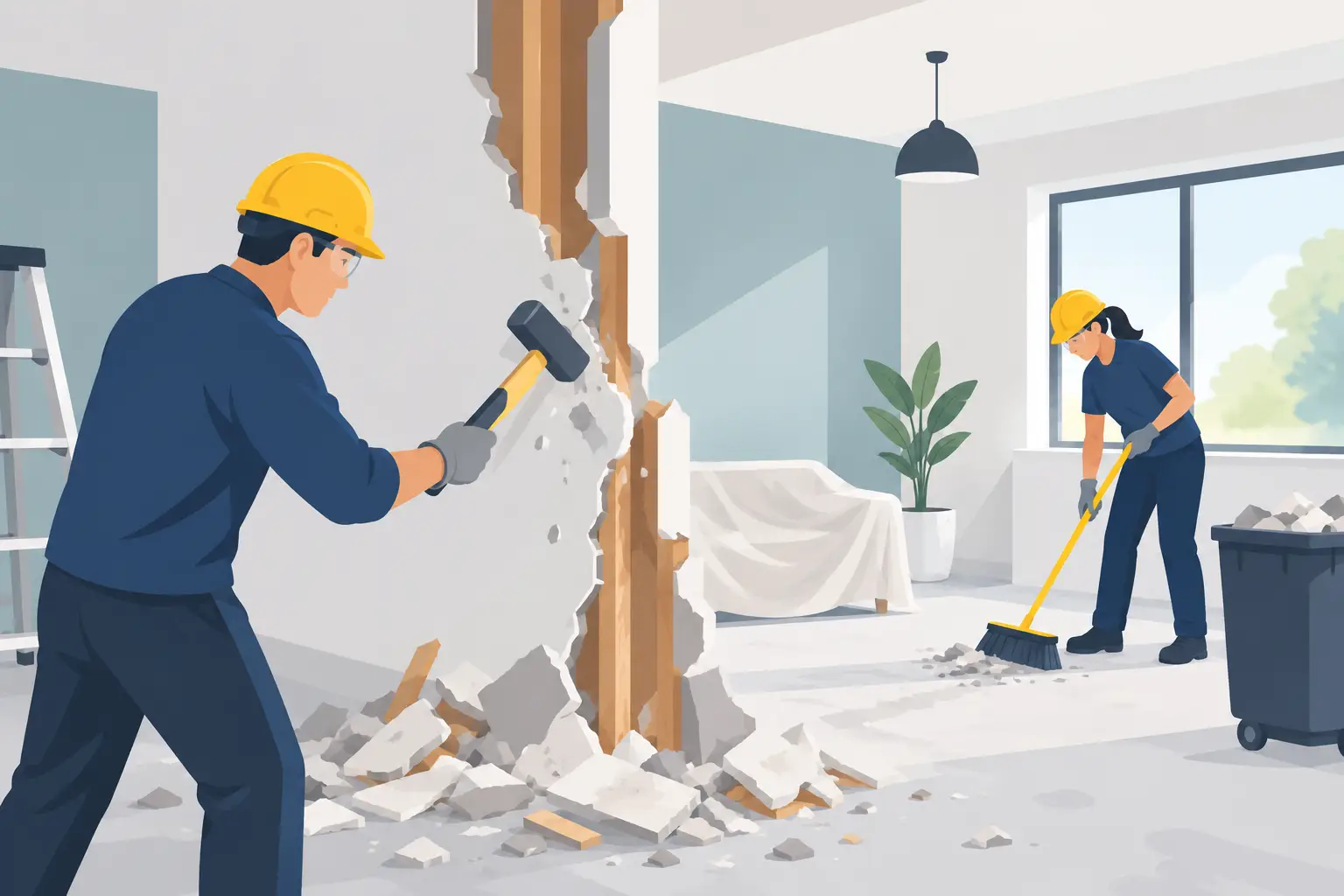
A bathroom with cracked tile, a sagging backyard shed, or a row of outdated kitchen cabinets can stop a property project before it starts. Light demolition removes the worn-out materials standing in the way without turning a targeted project into a full-scale teardown. For homeowners, landlords, contractors, and property managers, it is often the practical first step toward a cleaner, safer space.
The work may look simple from the outside: take down a wall, pull up carpet, remove a deck, haul away the debris. In reality, it involves heavy materials, sharp edges, hidden utilities, dust control, proper loading, and responsible disposal. A professional crew handles the hard work so you can focus on the repair, renovation, sale, or next use of the property.
What Light Demolition Usually Includes
Light demolition is targeted removal rather than the demolition of an entire building. The goal is to take out specific structures, fixtures, finishes, or interior components while protecting the areas that stay in place.
Inside a home or commercial property, that might mean removing old cabinets, countertops, flooring, carpet, drywall, non-load-bearing walls, bathroom fixtures, built-in shelving, or an outdated kitchen. These projects are common before remodeling, after water damage, or when a rental unit needs to be turned over quickly between tenants.
Outside, light demolition can include decks, sheds, fences, small barns, playsets, trampolines, hot tubs, and other structures that have become unsafe or no longer serve the property. On the Eastern Shore, weather exposure can turn a once-useful structure into a source of rot, loose fasteners, and storm debris. Removing it before it fails can protect people, pets, and nearby property.
Some projects are larger but still targeted, such as mobile home removal or dismantling an old chicken house. The right approach depends on the structure’s condition, access to the site, material type, and whether utilities or foundations need special attention.
When Light Demolition Makes More Sense Than Repair
Repair is often worth considering when the structure is sound and the problem is limited. A few damaged deck boards, a single broken cabinet door, or a small section of drywall may be a straightforward repair. Demolition becomes the better option when damage is widespread, safety is uncertain, or the cost of repeated repairs is higher than starting fresh.
A landlord may decide to remove worn carpet and damaged cabinetry after a long-term tenancy instead of trying to patch years of wear. A homeowner preparing to sell may remove a collapsing shed that distracts from an otherwise well-kept yard. A business owner may clear out obsolete office partitions and fixtures to make room for a more functional workspace.
The key question is not simply, “Can this be fixed?” It is, “Does fixing it make sense for how this space needs to work next?” Removing a problem area can create a clean starting point, but it should be planned carefully. Structural walls, plumbing, electrical lines, gas connections, and hazardous materials require qualified evaluation before anything comes down.
Why DIY Demolition Can Get Complicated Fast
There is a reason demolition debris piles up quickly. Cabinets are heavier than they look, old carpet can hold years of dirt and moisture, and a small deck can produce a truckload of lumber, nails, and hardware. Once materials are removed, they still need to be lifted, sorted, loaded, transported, and disposed of properly.
The physical risk is real. Splintered wood, broken glass, rusty metal, exposed nails, and unstable materials can cause injuries. Dust from drywall, insulation, and old flooring can spread through a home if the work area is not contained. Removing the wrong wall or cutting near an unseen line can turn a planned update into an expensive repair.
Disposal is another common surprise. Construction debris cannot always be placed at the curb, and different materials may have different disposal requirements. Appliances, electronics, paint, treated wood, and certain building materials may need separate handling. Renting a dumpster or truck can help in some situations, but it also leaves you with the labor and sorting.
For a straightforward but labor-intensive project, a full-service crew can save considerable time. You do not need to find help to carry a refrigerator out of a basement, break down a weathered playset, or load heavy debris after an interior tear-out. The crew does the lifting, loading, hauling, and cleanup.
A Better Way to Plan a Light Demolition Project
A successful project begins with a clear scope. Walk through the property and identify exactly what needs to go and what must remain protected. It helps to take photos before work begins, especially in rental properties, estate cleanouts, and commercial spaces where several people are involved in decisions.
Next, consider access. Can a truck reach the structure? Are there narrow gates, stairs, low branches, elevators, or tight hallways? Access affects how materials are removed, how long the job takes, and how much labor is needed. It is also helpful to point out any fragile landscaping, flooring, door frames, or nearby belongings that need extra care.
Before demolition begins, make sure utilities are addressed where applicable. Water, gas, electric, and communication lines may need to be disconnected or confirmed safe. If a wall could be load-bearing, or if a structure has unusual construction, get the appropriate professional assessment first. A reliable removal team can handle the physical removal, but safety decisions should never be based on guesswork.
Finally, plan the next step before the old materials are gone. Are contractors arriving to remodel the bathroom? Is a property being listed for sale? Does the area need grading, cleaning, or new flooring? Good timing keeps debris from sitting around and helps the project move forward without unnecessary delays.
What a Professional Removal Crew Should Handle
A dependable light demolition service should make the process feel controlled from the first estimate to the final sweep-up. That starts with an on-site assessment, where the crew can see the materials, access points, and labor involved. Clear upfront pricing matters because demolition work is often more involved than it first appears.
The crew should arrive prepared to protect the surrounding space, remove the agreed-upon materials carefully, and haul away the debris. For interior work, that means being mindful of floors, hallways, and doorways. For outdoor work, it means watching for fences, landscaping, and access routes while breaking down and loading materials.
It also means handling disposal responsibly. Useful items may be eligible for donation, recyclable materials can be separated when practical, and the remaining debris should be taken to the appropriate disposal facility. This approach is more thoughtful than leaving a pile at the curb or sending everything to one place without sorting.
Insta Junk Removal provides this kind of hands-on support for projects across Maryland, Delaware, and Virginia. Whether you are clearing a kitchen before renovation, removing an unsafe shed, or emptying a property after an estate transition, the job includes the labor that many people do not have the time, equipment, or physical ability to take on themselves.
Preparing Your Space Before the Crew Arrives
You do not need to do the demolition work ahead of time. In fact, leaving heavy or awkward items in place often makes removal safer. A few simple preparations can help the appointment go smoothly: move personal belongings away from the work area, make sure pets are secure, clear a path to the project site, and identify anything that is staying.
If you are managing a rental, estate, or commercial property from a distance, photos and a clear written list can help confirm the scope. For occupied homes, let household members know which spaces will be unavailable during the work. Small steps like these help the crew work efficiently and reduce the chance of accidental confusion.
A clean, open space changes what is possible. It makes a renovation easier to start, a rental easier to show, and a property safer to use. When old materials have reached the end of their usefulness, removing them carefully is not just cleanup – it is a practical way to make room for the next good decision.