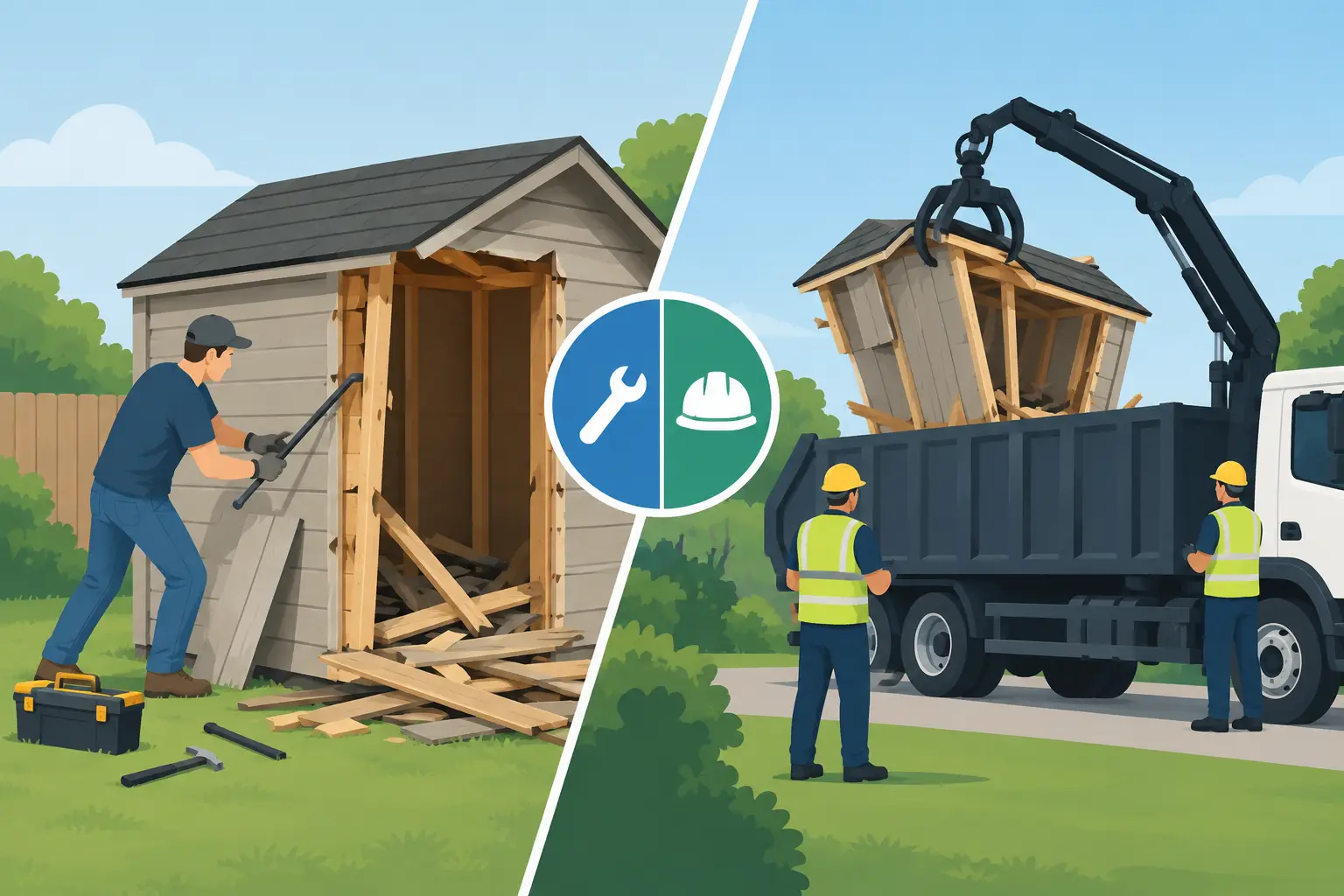
A shed can look harmless until it starts coming apart. Rotting floor joists, cracked siding, rusted nails, a sagging roof, and years of stored paint cans or lawn equipment can turn a weekend project into a bigger job than expected. When weighing DIY shed removal versus professionals, the right choice comes down to more than the price of a dumpster. It is about safety, time, tools, disposal, and how clean you need the property when the work is finished.
For a small, empty shed that is still structurally sound, doing the work yourself may be reasonable. For an old, unstable, oversized, or packed shed, hiring help can save you from injury, repeat dump runs, and a half-finished pile in the yard.
DIY Shed Removal Versus Professionals: The Real Difference
The biggest difference is not simply who swings the hammer. A DIY project leaves you responsible for every stage: clearing the contents, disconnecting any power, taking the structure apart safely, sorting materials, loading debris, hauling it away, and cleaning the site. Professional removal puts that responsibility on a trained crew with the labor, equipment, and disposal plan already in place.
DIY can look less expensive at first. You may only be thinking about a few tools and a landfill trip. But costs can grow quickly if you need to rent a dumpster, trailer, reciprocating saw, pry bars, safety gear, or a skid steer for a slab or difficult access point. There is also the value of your own time, especially if the project stretches across several weekends.
A professional service has an upfront cost, but it typically includes labor, loading, hauling, and disposal. That makes budgeting easier for homeowners, landlords, and property managers who need the shed gone on a specific schedule.
When Removing a Shed Yourself Can Make Sense
DIY removal is most practical when the structure is small, lightly built, easy to access, and empty. A simple 6-by-8-foot wood shed with no electricity, no concrete foundation, and no major rot is very different from a large workshop with shelves, old chemicals, and a roof that has started to collapse.
You should also have enough help. Even a small shed has awkward materials to manage, including long wall sections, roofing panels, plywood, and framing lumber full of nails. Trying to handle these pieces alone can cause damage to fencing, landscaping, vehicles, or the house.
A do-it-yourself approach may work well if you have the right tools, know how to separate materials, and have a legal way to dispose of everything. Break the project into manageable stages. Empty the shed first, remove doors and windows, take off the roof, dismantle wall sections, then pull apart the floor and framing. Working from the top down helps prevent the structure from shifting unexpectedly.
Even in a DIY project, avoid rushing. A shed that appears sturdy may be held together by little more than damaged sheathing and rusted fasteners.
DIY Costs Are More Than a Dumpster Fee
Before committing, add up the full cost. You may need a dumpster or trailer rental, landfill or transfer-station fees, fuel, blades, gloves, eye protection, tarps, and disposal for items that cannot go in regular trash. If the shed contains electronics, oil, paint, pesticides, propane tanks, or other household hazardous materials, those may require separate handling.
Then consider cleanup. Nails hide in soil and grass, while broken glass and splintered wood can remain long after the visible debris is gone. A magnetic sweeper can help collect loose metal, but it adds another step and another piece of equipment to buy or borrow.
When Professional Shed Removal Is the Better Call
Professional removal is usually the safer option when a shed is deteriorating, large, attached to another structure, or difficult to reach. It is also a practical choice when the shed sits near a fence, pool, garden bed, utility line, or neighboring property where one wrong move could create expensive damage.
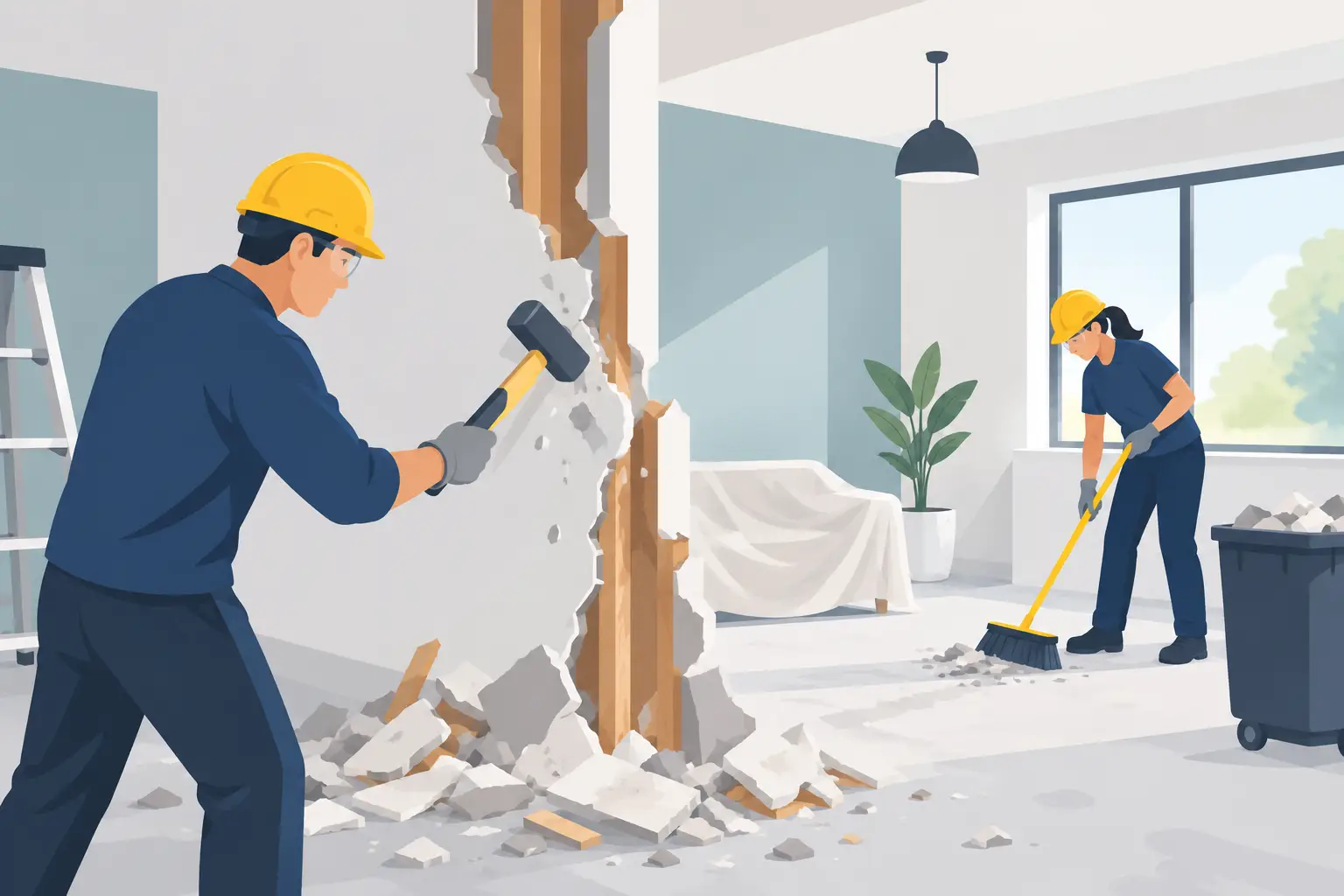
A crew can assess the shed before beginning work and choose a controlled removal method. That may mean taking the structure apart in sections rather than pushing it over or trying to pull it apart with a vehicle. The goal is to keep debris contained and protect the surrounding space.
For busy homeowners, the convenience is often the deciding factor. You do not have to recruit friends, rent equipment, make multiple disposal trips, or figure out what each material can accept. A full-service team handles the lifting, loading, hauling, and sorting while you focus on the next use for the space.
This is especially valuable for rental turnovers, estate cleanouts, home sales, and renovation schedules. If an old shed is holding up a new fence, patio, garden, or listing photos, a dependable removal date matters.
Safety Issues That Should Not Be Ignored
Old sheds can carry risks that are easy to underestimate. A weakened roof can fail when weight shifts. Nails may be hidden under leaves and debris. Damaged electrical wiring, wasp nests, mold, animal waste, and sharp sheet metal are common problems. Older buildings may also contain materials that should not be cut, broken, or disposed of casually.
If electricity runs to the shed, have it properly disconnected before demolition begins. Do not assume a switch in the off position means the wiring is safe. If you suspect asbestos-containing material, lead paint, or another hazardous building material, pause the project and seek qualified guidance before disturbing it.
Professionals are not a substitute for specialized hazardous-material abatement when that is required. However, an experienced removal company can identify when a job needs a different plan rather than treating every structure like ordinary junk.
Disposal Can Decide the Whole Project
Once a shed is down, you may have wood, shingles, metal, plastic, glass, concrete, insulation, shelving, and the contents that were stored inside. Not all facilities accept the same materials, and not everything belongs in a landfill. Disposal rules and fees can vary by location and material type.
This is where a professional service can make the process much simpler. Companies such as Insta Junk Removal assess the debris on site, load it up, and route materials for responsible disposal, recycling, or donation when appropriate. You get one point of contact and a clean, clutter-free result instead of a driveway full of separated piles.
Responsible disposal also matters when you are clearing a property for sale or preparing a rental. Leaving debris at the curb, burning construction materials, or using an unsuitable dump site can create problems that cost more to correct later.
Questions to Ask Before You Decide
Start with the shed itself. How large is it? Is the roof stable? Is there a concrete pad, electrical connection, or heavy built-in workbench? Is it filled with belongings that need sorting first? Next, think about access. Can a trailer or truck reach the area, and is there room to stage debris safely?
Be honest about your schedule and physical capacity. Taking down a shed is demanding work, and cleanup takes longer than most people expect. If you have a free weekend, reliable help, safe conditions, and a straightforward disposal plan, DIY may be worthwhile. If you need speed, labor, careful property protection, and complete hauling, professional removal is often the more predictable value.
Choose the Option That Leaves the Property Ready
The best choice is the one that gets the shed removed without creating a bigger problem behind it. A small, stable structure can be a satisfying DIY project when you have the time and preparation. But if the shed is unsafe, packed with debris, or standing in the way of your plans, letting a courteous crew take ownership of the heavy work can bring faster peace of mind – and an outdoor space that is ready for what comes next.