Donation Pickup Versus Junk Hauling Compared
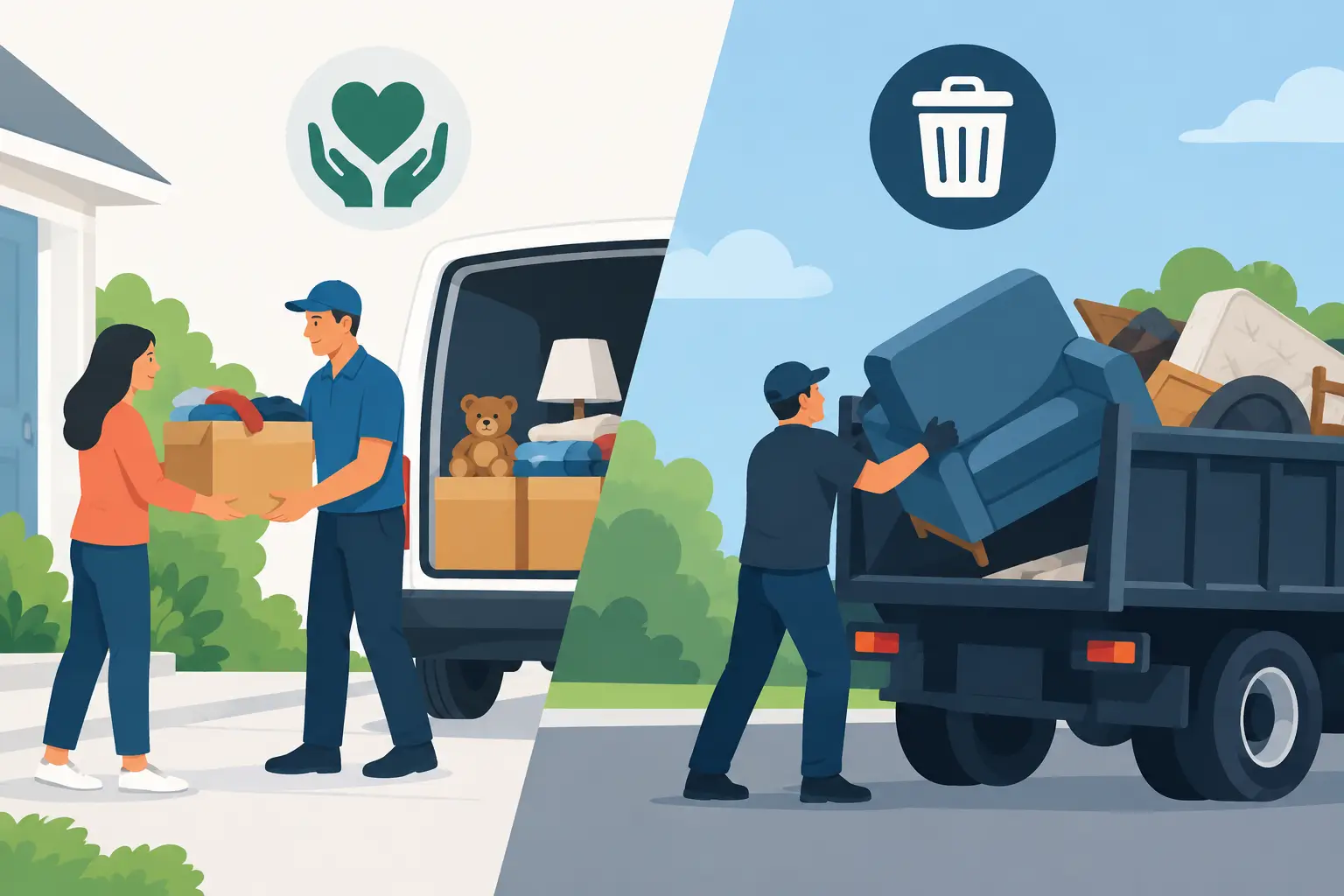
A spare bedroom full of furniture, a garage packed with old boxes, or an inherited home can make one question feel more complicated than it should: what should be donated, and what needs to go? The donation pickup versus junk hauling decision comes down to the condition of your items, the scope of the project, and how much work you can take on yourself.
Donation is a worthwhile choice when items are clean, safe, and genuinely useful to another household. Junk hauling is often the better fit when you need a complete, dependable cleanout - especially when heavy lifting, stairs, bulky pieces, damaged items, or a tight deadline are involved. Knowing the difference helps you clear the space without creating extra calls, delays, or piles at the curb.
What Donation Pickup Is Designed to Handle
Donation pickup services generally accept items that are ready for immediate reuse. Think of clean sofas without tears or odor, working lamps, usable dining tables, gently used clothing, kitchenware, and household goods in good condition. The goal is to move items from one home to another, not to sort through a mixed load of unwanted material.
That is why a donation pickup can be a great option after a careful move, downsizing project, or room refresh. If you have several pieces that meet a charity's requirements and can wait for its available pickup date, donating keeps useful goods in circulation and may provide documentation for a potential tax deduction.
However, donation organizations set their own acceptance rules. Many cannot take mattresses, broken furniture, stained upholstery, old televisions, partially disassembled items, or anything with signs of pests, mold, or water damage. They may also decline an entire pickup if the items do not meet their standards. That is not a reflection on your effort - it simply protects the people receiving donated goods and the volunteers processing them.
When Junk Hauling Makes More Sense
Junk hauling is built for the real-world cleanup projects that do not arrive in donation-ready condition. A professional crew can remove a mix of items in one visit: worn-out furniture, appliances, bagged trash, boxes, old electronics, shelving, yard debris, renovation leftovers, and more. You point out what needs to go. The crew handles the lifting, loading, and haul-away.
This approach is especially useful for estate cleanouts, rental turnovers, foreclosure properties, office cleanouts, and homes preparing for sale. These projects often contain a combination of reusable belongings, recyclables, donation candidates, and materials that must be disposed of properly. Trying to coordinate separate donation, recycling, and disposal pickups can turn a one-day cleanup into a multi-week task.
For homeowners in Salisbury and across the Eastern Shore, junk hauling also removes the problem of transportation. A heavy sectional, refrigerator, filing cabinet, or broken playset may not fit in a personal vehicle. Even if it does, loading it safely, securing it, and finding the correct drop-off location takes time and physical effort. A uniformed crew arrives with the labor and equipment to get the job done without leaving you to wrestle furniture through a doorway.
Donation Pickup Versus Junk Hauling: The Key Differences
The biggest difference is item condition. Donation pickup is intended for items that another person can use as they are. Junk hauling accepts the things that are no longer useful, along with usable items that need to be removed as part of a larger cleanup.
Timing matters, too. Donation pickups usually operate on a schedule determined by the organization, and availability can vary. Junk removal can be scheduled around your move, renovation, closing date, tenant turnover, or family visit. If a property must be cleared quickly, that flexibility can be the difference between a smooth handoff and a stressful last-minute scramble.
Labor is another practical consideration. Some donation services ask that items be outside, accessible from the ground floor, or ready at the curb. With junk hauling, you do not need to drag a dresser down basement steps or carry an old washer out of a laundry room. The crew does the heavy lifting while taking reasonable care around walls, floors, doorways, and common areas.
Cost can vary by provider and project. Donation pickup may be free for accepted items, though that does not help if the organization declines them or cannot come soon enough. Junk hauling is a paid service, but upfront pricing accounts for labor, loading, transportation, and responsible handling. For a large or mixed cleanout, it can be more efficient than making repeated trips or paying for a dumpster you have to load yourself.
A Mixed Load Does Not Have to Become a Big Problem
Most cleanup jobs are not neatly divided into donation boxes and trash bags. A family cleaning out a parent's home might find a solid wood table worth donating, alongside a damaged recliner, expired paint, old bedding, broken lamps, and a basement full of cardboard. A landlord may have reusable office chairs mixed with abandoned mattresses and bags of household debris.
Start by setting aside anything clearly valuable, personal, or in excellent working condition. Check drawers, cabinets, closets, and storage bins before removal begins. Important documents, photos, jewelry, and family keepsakes are easy to miss in a fast cleanout.
Then be honest about what remains. If an item is cracked, heavily worn, incomplete, stained, odor-affected, unsafe, or likely to be rejected, it belongs in the removal plan rather than the donation pile. Leaving unsuitable donations at a drop-off site creates more work for nonprofits and can lead to illegal dumping concerns.
A responsible junk removal company can still look for appropriate diversion options. Reusable items may be directed toward donation when accepted, recyclable materials can be separated where practical, and the rest can be disposed of through proper channels. Environmentally responsible handling does not mean promising that every item can be saved. It means making sensible choices while completing the job properly.
Questions to Ask Before You Schedule
Before choosing a service, look at the project as a whole instead of focusing on one or two good items. Ask yourself whether everything is clean and usable, whether you can wait for a charity's schedule, and whether you can move the items safely to the required pickup location.
Also consider access. Narrow staircases, second-floor apartments, crowded garages, wet sheds, and commercial spaces with limited loading access all change the amount of labor involved. A professional removal crew can assess those details during a free, no-obligation estimate and explain the price before work begins.
If you are managing an estate, rental property, or business location from out of town, communication matters just as much as removal. Choose a company that answers directly, arrives when scheduled, and gives you a clear plan for what will be removed. You should not have to chase down a crew or wonder whether the property will actually be cleared.
Choose the Option That Clears the Way Forward
Donation pickup is a strong choice for a manageable group of clean, reusable items and a flexible timeline. Junk hauling is the practical answer when the load is mixed, the work is physically demanding, or you need the space back now. Neither option is automatically better - the right one is the one that fits the condition of your items and the demands of your project.
When the job includes more than you can reasonably sort, lift, and transport, Insta Junk Removal can take the weight off your shoulders with careful removal, upfront pricing, and convenient scheduling. One clear path forward can turn an overwhelming room, property, or jobsite into clean, clutter-free space again.
Need junk removed or something demolished?
Free, no-obligation estimates across the Eastern Shore.