Abandoned Furniture Removal Without the Hassle
A sofa left beside a dumpster, a bedroom set abandoned after a move-out, or a desk collection sitting in a vacant office can turn into a bigger problem fast. Abandoned furniture removal is about more than making an eyesore disappear. It requires clear permission, safe heavy lifting, the right hauling equipment, and a responsible plan for where each item goes next.
For homeowners, landlords, estate representatives, and business owners, the goal is simple: clear the space without spending a weekend wrestling a stained mattress down a stairwell or guessing whether the local dump will accept it. A professional crew takes on the physical work so you can focus on getting the property ready for its next use.
When Abandoned Furniture Removal Is the Right Call
Furniture is often called “abandoned” when it has been left behind after a tenant moves, a property changes hands, an office closes, or a family clears an estate. But an item that looks unwanted is not always legally abandoned. That distinction matters, especially at rental homes, apartment communities, storage areas, and commercial properties.
If the furniture was left by a former tenant, follow your lease requirements and applicable local rules before arranging removal. Property managers may need to document the items, provide required notice, or hold belongings for a set period. Take photos, record where the furniture was found, and confirm that you have authority to dispose of it. Once that is settled, removal can move quickly.
For a homeowner cleaning out a garage, basement, shed, or inherited property, the decision is usually more straightforward. Old recliners, broken bed frames, worn-out dining sets, damaged cabinets, and unwanted patio furniture take up valuable room. Clearing them out can make a home safer, easier to show, and more comfortable to use.
Curbside furniture is a different situation. Do not assume that a couch on the curb is free to take or toss. It may be waiting for a scheduled municipal pickup, belong to a neighbor, or be placed where removal is restricted. If it is on your property and you are responsible for it, a removal team can help get it loaded and hauled away properly.
Why Furniture Is Harder to Remove Than It Looks
A single bulky item can create more work than expected. Sofas catch on door frames. Dressers are awkward on stairs. Water-damaged particleboard can crumble when lifted. Older appliances or furniture may also be sitting behind piles of boxes, loose debris, or sharp hardware.
Then there is the transportation issue. A pickup truck may not fit a sectional, several mattresses, and a dining table in one trip. Tying items down incorrectly can damage the furniture, scratch a vehicle, or create a road hazard. And once you arrive at a disposal site, you may face sorting rules, disposal charges, or limits on what can be accepted.
Professional removal is especially useful when the furniture is upstairs, in a tight hallway, behind a building, or inside a property that needs to stay protected. Uniformed crews can remove large items carefully, use proper lifting methods, and leave the area swept up rather than leaving behind splinters, screws, and packing debris.
A Straightforward Abandoned Furniture Removal Process
The best removal experience should feel controlled from the first call through the final sweep-up. Here is what that typically looks like.
1. Confirm what needs to go
Start by identifying the furniture and any related items that should be removed at the same time. This may include a couch, mattress, box spring, dresser, nightstands, dining chairs, filing cabinets, office desks, or broken shelving. If the items are part of a larger cleanout, point out boxes, appliances, trash, carpet, or construction debris as well.
Giving a clear picture of the job helps prevent surprises. Photos can be helpful when you request an estimate, particularly for large loads or furniture located in basements, upper floors, or difficult-to-access areas.
2. Get upfront pricing before work begins
Reliable junk removal pricing should be based on the amount of space the items take in the truck, along with labor and disposal needs. Access can affect the price when crews must carry heavy pieces down multiple flights of stairs, work around long distances, or handle unusually difficult materials.
What should not be a surprise is the final cost. Ask for a no-obligation estimate and make sure you understand what is included before the furniture is loaded. Clear pricing lets landlords approve a turnover expense, homeowners plan a cleanout budget, and businesses keep operations moving without uncertainty.
3. Let the crew handle the heavy lifting
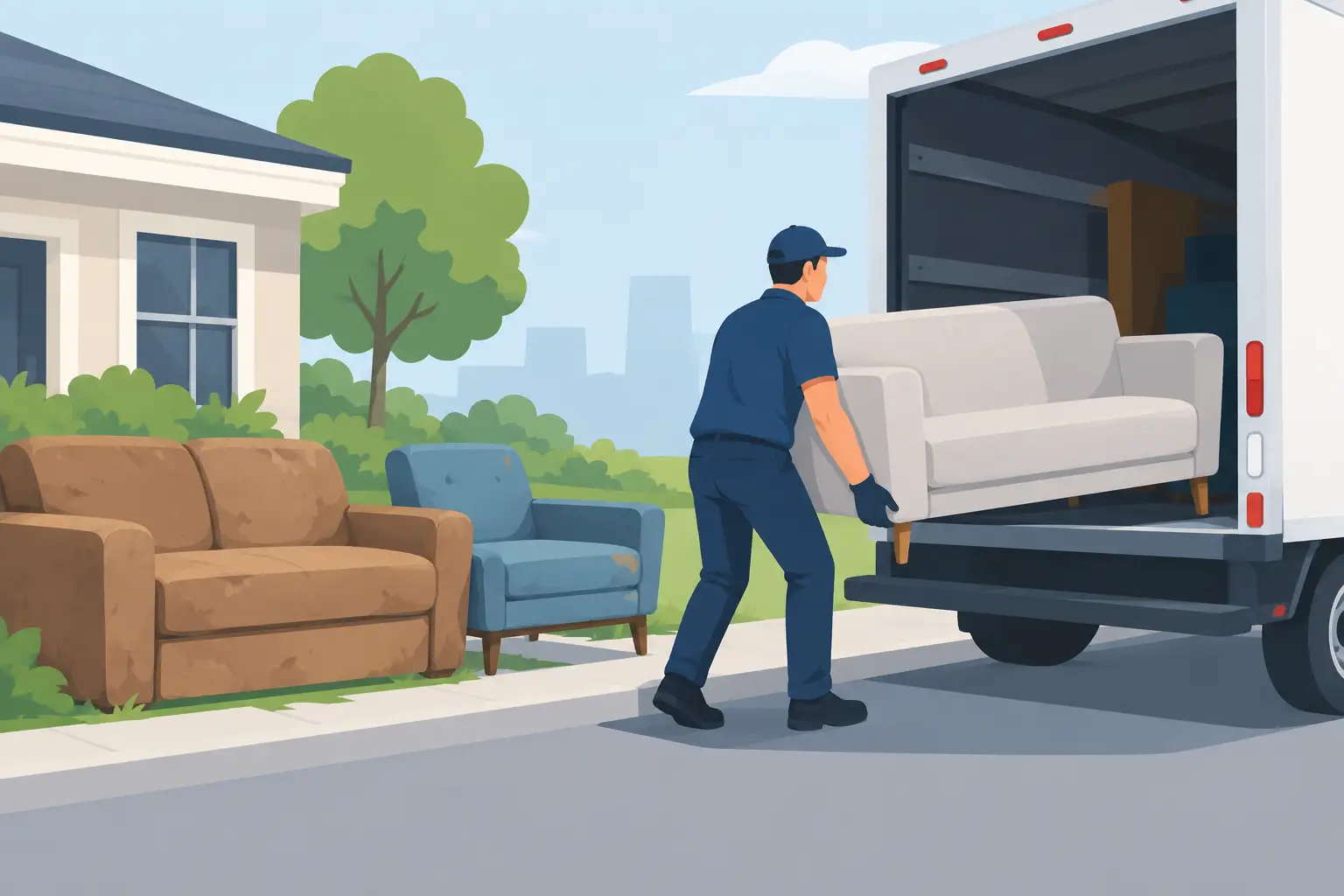
On removal day, you should not have to drag furniture to the curb or take apart a bulky sectional unless you want to. Point out the items, confirm what stays, and let the crew do the loading. A careful team protects doorways, floors, walls, and common areas while moving pieces through the property.
This is particularly helpful for seniors, families managing care transitions, and estate representatives handling a loved one’s home from out of town. It also saves property managers from asking maintenance staff to take on a task that can lead to injuries or property damage.
4. Receive a clean, usable space
Once the unwanted furniture is loaded, the difference is immediate. An empty room can be painted, rented, staged, renovated, or used again. A cleared garage can hold a car. A vacant office can be prepared for the next tenant. Small cleanup details matter because the job is not truly finished until the space feels ready.
What Can Be Removed With the Furniture
Furniture removal often becomes more efficient when related unwanted items are hauled away in the same visit. A bedroom cleanout may include mattresses, lamps, clothing, and boxes. A rental turnover may involve blinds, small appliances, abandoned trash, and damaged carpet. An office cleanout may include chairs, cubicles, filing cabinets, monitors, and breakroom equipment.
It depends on the condition and type of material. Intact items that are clean and usable may have a chance to be donated when appropriate. Damaged, wet, heavily stained, moldy, or pest-infested furniture usually needs disposal instead. Mattresses deserve special attention because many facilities have separate handling requirements.
Some materials require a different plan. Paint, chemicals, fuels, propane tanks, and certain electronics should not simply be mixed into a general furniture load. Mention these items during scheduling so the right disposal approach can be arranged.
Responsible Disposal Is Part of the Job
Dropping unwanted furniture in an empty lot, behind a business, or beside a dumpster without permission creates trouble for the property owner and the community. Illegal dumping can bring fines, attract pests, block access, and make a neighborhood look neglected.
Responsible hauling means sorting materials whenever practical and using approved disposal, recycling, or donation options. Not every item can be reused, and no reputable service should promise that every piece will be donated. The condition of the furniture, local facility rules, and sanitation concerns all affect the outcome. Still, choosing a company that makes an effort to divert reusable materials is a better alternative to abandoning them on the curb.
For Eastern Shore properties in Salisbury, Ocean City, Berlin, Princess Anne, Georgetown, Millsboro, and nearby communities, local knowledge also helps. Crews familiar with the area can plan around access limitations, rental turnovers, beach-property schedules, and the distance to approved disposal facilities.
Get the Property Ready Without Doing the Work Yourself
Before the crew arrives, keep a clear path to the furniture when possible and remove any personal belongings you plan to keep. If a dresser or cabinet has drawers, check them carefully for documents, jewelry, medications, tools, and keys. Make sure pets are secure, and let the crew know about narrow staircases, elevators, gate codes, or parking restrictions.
That is enough preparation for most jobs. You do not need to disassemble furniture, rent a truck, or recruit friends for a difficult lift. Insta Junk Removal provides free, no-obligation estimates, upfront pricing, and convenient scheduling for furniture left behind at homes, rentals, offices, and estates. Call or text (443) 365-1942 when you are ready to reclaim the space.
A room filled with unwanted furniture can feel like a problem waiting for the right day. With permission confirmed and a dependable removal plan in place, that day can be much sooner than you think.
Need junk removed or something demolished?
Free, no-obligation estimates across the Eastern Shore.