

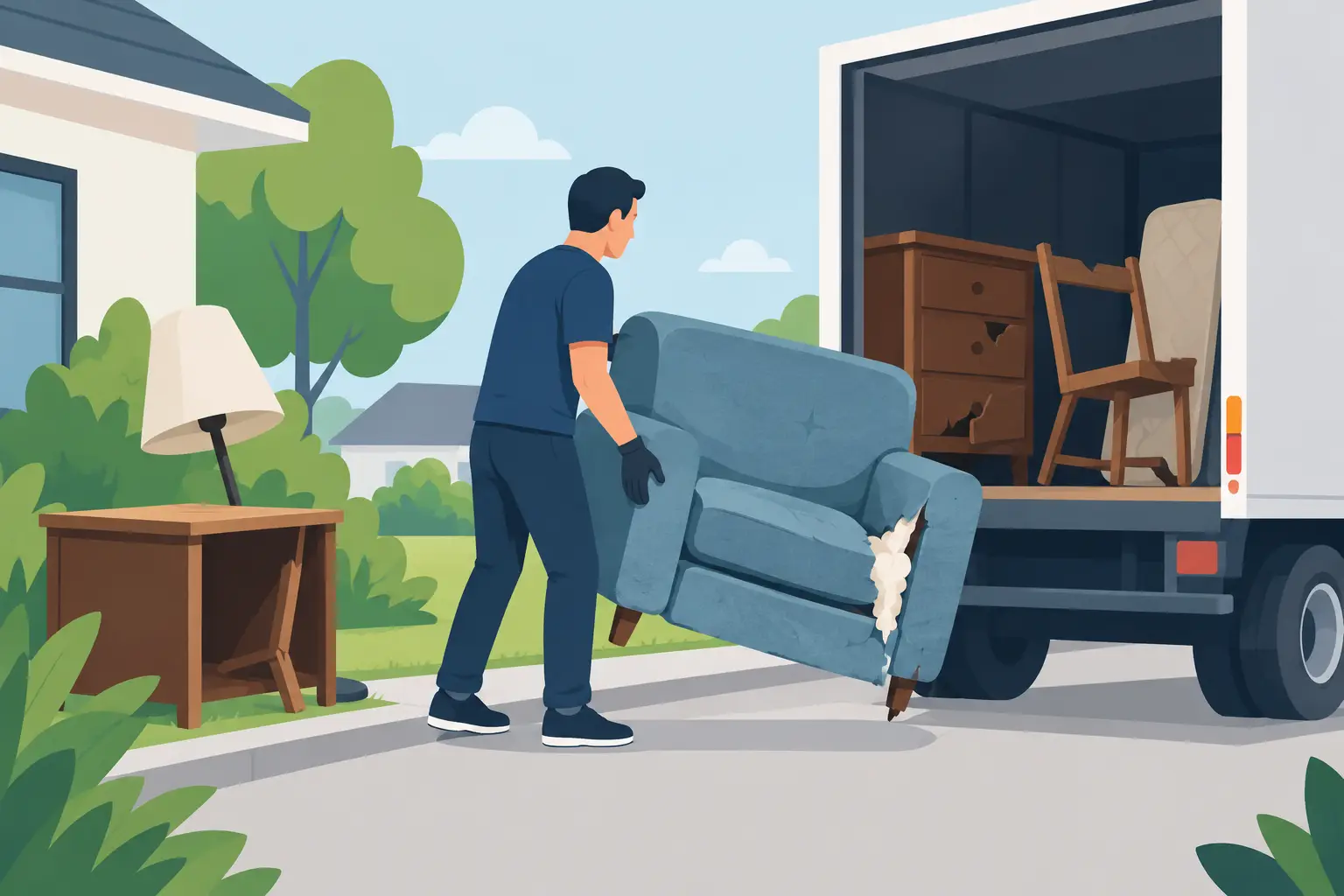
A broken sofa can turn a garage, rental turnover, or curbside cleanup into a bigger job than expected. Knowing how to dispose of broken furniture starts with one practical question: is the piece truly beyond use, or does it need a safer, more responsible way out of your space? A cracked dining chair, collapsed mattress, water-damaged dresser, or sagging recliner each calls for a slightly different plan.
The goal is not simply to get it gone. It is to remove it without damaging walls, blocking a driveway, violating local collection rules, or sending usable materials to the landfill when a better option exists. For many homeowners and property managers, the easiest choice is a full-service removal crew that handles the lifting, loading, hauling, and sorting. But it helps to understand your options before you move a single heavy item.
Check Whether the Furniture Is Actually Beyond Repair
Start with an honest condition check. Furniture with a loose leg, missing hardware, torn fabric, or cosmetic scratches may still be repairable, reusable, or suitable for donation. A solid wood table with surface damage, for example, may be worth refinishing. A chair with a worn seat cushion may need upholstery work rather than disposal.
Some damage makes reuse a poor choice. Furniture should generally be removed rather than donated when it has mold, pest activity, severe odors, broken structural supports, sharp exposed pieces, major water damage, or heavily soiled upholstery. Mattresses and upholstered furniture affected by bed bugs should be handled especially carefully. Covering the item before moving it can help prevent pests or debris from spreading through your home, apartment building, or rental property.
Before deciding, check for these common issues:
- Loose glass, protruding staples, nails, or broken springs
- Mold, mildew, water staining, or a strong musty odor
- Signs of bed bugs, rodents, or other pests
- Cracked frames, collapsed supports, or unsafe drawers and doors
If the piece is unsafe to carry or falling apart, do not try to drag it through the house alone. That is how doorframes get scraped, backs get strained, and small disposal jobs become expensive repairs.
How to Dispose of Broken Furniture Based on Its Condition
The right disposal route depends on the material, condition, and local options. A metal bed frame has a different destination than a particleboard bookcase or a fabric sectional. Separating those choices can reduce waste and make the removal process simpler.
Donate or Give Away Furniture That Is Still Usable
If the furniture is structurally sound, clean, and safe, someone else may be able to use it. Local charities, community groups, shelters, and secondhand organizations may accept certain pieces, although acceptance rules vary. Many will not take damaged upholstered items, stained mattresses, or furniture requiring repair.
Be accurate when describing the condition. Calling a wobbly, broken dresser “good condition” wastes time for everyone and can leave the item sitting in your driveway. Clear photos and an honest description are the courteous approach.
Recycle Metal, Wood, and Other Recoverable Materials
Some furniture can be broken down for recycling. Metal bed frames, filing cabinets, table legs, and certain shelving units may be accepted as scrap metal. Clean, untreated wood may have reuse options in some areas, while cardboard packaging, removable metal hardware, and select plastics can sometimes be sorted separately.
There are trade-offs. Dismantling a large item takes time, tools, and room to work safely. Particleboard, laminate furniture, glued composites, foam, and mixed-material upholstery are often harder to recycle. If you are clearing an estate, renovating a room, or managing several units, sorting every component yourself may not be the best use of your time.
Use Bulk Pickup When the Rules Fit the Job
Some towns and waste providers offer scheduled bulk collection for furniture. This can be a cost-effective option for a single manageable item, but it is not always immediate. You may need to schedule in advance, follow size limits, place items in a specific location, or pay an additional fee.
Never assume curbside pickup will take a broken couch, sleeper sofa, large armoire, or mattress. Leaving unapproved items at the curb can lead to missed pickup, neighborhood complaints, or local penalties. Call your provider first and ask what they accept, how items must be prepared, and whether upholstered furniture or mattresses need wrapping.
Take It to a Disposal Facility if You Have the Means
A personal trip to a transfer station or landfill can work if you have a suitable vehicle, help for loading, and the ability to secure the load properly. This route may be practical for a small chair, disassembled table, or a few lightweight pieces.
It becomes more complicated with oversized furniture. Sofas, dressers, entertainment centers, and recliners are awkward, heavy, and prone to shifting. You will also need to protect your vehicle from scratches, manage disposal fees, and unload everything at the facility. For a large cleanout, the hauling effort can outweigh the savings.
When Full-Service Junk Removal Makes More Sense
Full-service removal is often the straightforward answer when furniture is bulky, damaged, upstairs, wet, or part of a larger cleanup. It is especially useful during a move, estate cleanout, eviction turnover, renovation, or care transition, when there are already too many details to manage.
With a professional crew, you receive an on-site assessment and upfront price based on the space your items take up in the truck. The crew handles the labor, from carefully removing the furniture to loading it and sorting it for donation, recycling, or responsible disposal where possible. You do not have to borrow a truck, recruit friends, or risk carrying a broken sleeper sofa down a narrow staircase.
Insta Junk Removal serves homeowners, landlords, businesses, and property managers across the Eastern Shore with flexible scheduled pickups and same-day availability when scheduling permits. This is a practical option for furniture that cannot wait at the curb, including broken sectionals, mattresses, office desks, filing cabinets, patio furniture, and damaged bedroom sets.
Prepare the Space Before Pickup or Hauling
A few minutes of preparation makes removal safer and faster. Empty drawers, cabinets, and storage compartments first. Check pockets, cushions, and hidden compartments for documents, jewelry, remotes, medications, and personal items. It is surprisingly easy to lose something important inside a recliner or old desk.
Next, clear a path from the furniture to the exit. Move rugs, lamps, boxes, pet bowls, and fragile decorations out of the way. If the item is near a wall, take down artwork or anything that could be bumped during removal. For apartment buildings and offices, confirm elevator access, loading areas, and any building rules before the crew arrives.
If the furniture is wet, moldy, or pest-damaged, mention it when requesting an estimate. Clear information allows the removal team to prepare appropriately and helps prevent surprises on pickup day.
Avoid These Common Furniture Disposal Mistakes
The most common mistake is waiting until the last minute. A broken piece may seem harmless in a basement or garage, but it quickly becomes an obstacle when a move-out date, contractor schedule, or property showing is approaching. Arrange disposal early, particularly for large cleanouts.
Another mistake is setting furniture outside too soon. Rain can make an already damaged sofa heavier and harder to handle, while wind can scatter broken pieces across the yard. Curbside placement also creates a safety issue if sharp wood, nails, or shattered glass are exposed.
Finally, do not underestimate the weight of older furniture. Solid wood armoires, sleeper sofas, desks, and entertainment centers can be deceptively heavy. Removing them without enough help can cause injuries and damage floors, walls, and stair rails.
A broken piece of furniture does not have to become a long-running project in your home or property. Choose the disposal method that fits its condition, your schedule, and the amount of lifting you can safely manage, then make room for a clean, clutter-free space.