Retail Fixture Removal Case: A Clean Store Turnover
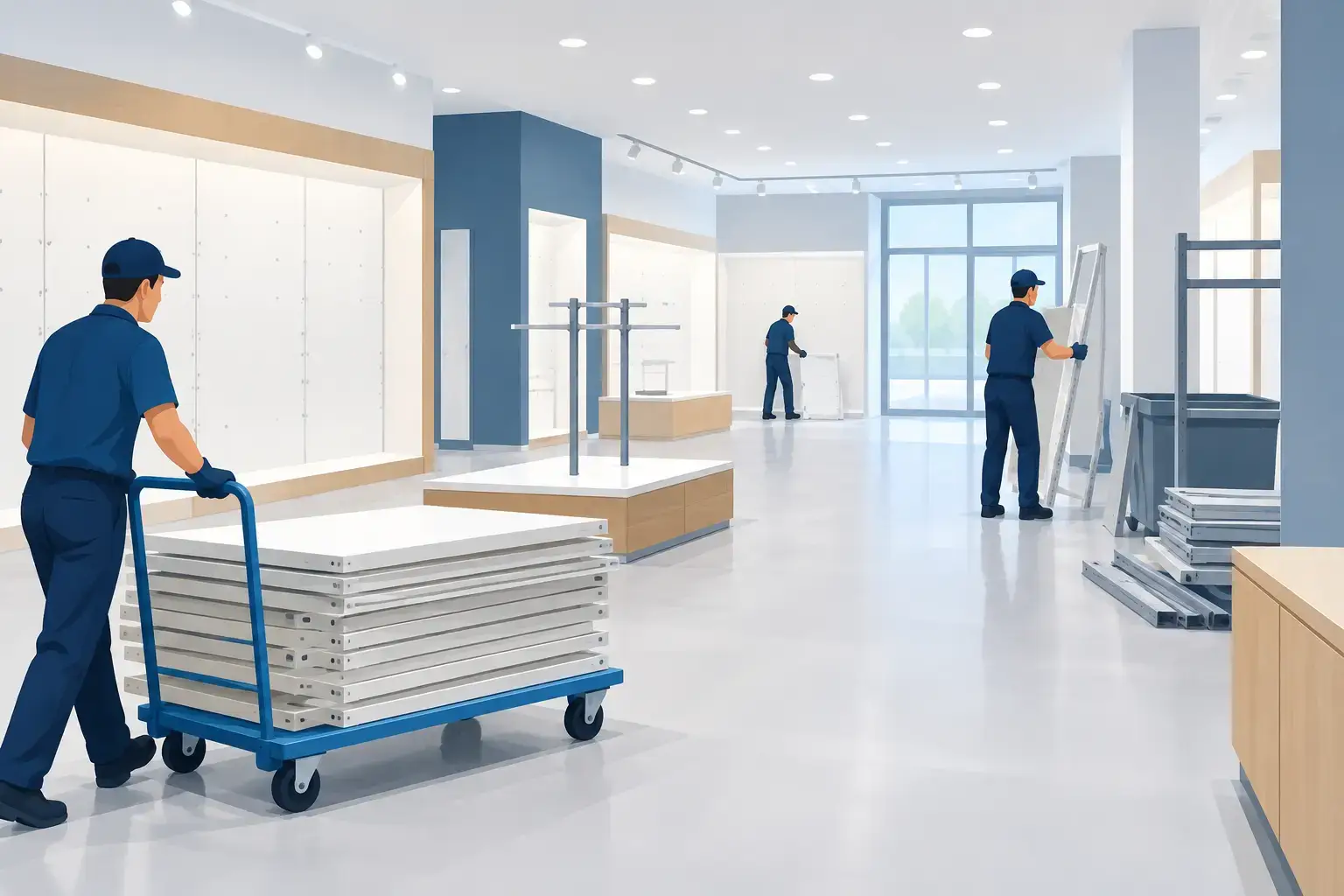
A retail fixture removal case can look simple from the sidewalk: a store has closed, the displays are no longer needed, and the space needs to be empty. Inside, it is rarely that simple. Heavy gondola shelving, checkout counters, wall-mounted racks, mannequins, broken displays, old inventory, wiring, and back-room furniture can turn a vacant storefront into a time-sensitive removal job.
For landlords, property managers, retail owners, and commercial contractors, the goal is not merely to haul things away. The goal is to return a clean, usable space without damaging walls, floors, entrances, or neighboring businesses. That takes a clear plan, the right crew, and honest communication about what is being removed.
The Situation: A Storefront With a Firm Turnover Deadline
Consider a typical retail turnover. A small shop has vacated a strip-center unit, and the next tenant is scheduled to begin painting, flooring, or renovations within days. The former tenant has left behind metal shelving, display tables, clothing racks, a cash-wrap counter, filing cabinets, damaged particleboard fixtures, and boxes of unsellable merchandise.
Some items may be loose and ready to load. Others may be bolted to walls, anchored to the floor, or built into a corner. A rushed removal can leave holes in drywall, scrape a finished floor, block a shared parking area, or create a safety issue for workers and customers nearby. The property manager needs a dependable team that can assess the load, do the heavy lifting, and leave the unit broom-clean.
That is where professional commercial junk removal earns its value. Instead of coordinating multiple pickups, finding labor, renting equipment, and making landfill runs, the customer can schedule one crew to take ownership of the physical work.
What Makes Retail Fixture Removal Different
Retail fixtures are built to hold weight and withstand daily use. That is useful when a store is open, but it can make removal difficult. Gondola shelves and slatwall panels often come apart in sections, while long counters and display cases may need to be carefully disassembled before they can fit through a doorway.
There is also a difference between removing a fixture and demolishing part of a space. A freestanding display rack can usually be loaded quickly. A built-in counter, wall-mounted cabinet, or fixture secured with fasteners requires more care. Before removal begins, the crew should identify what belongs to the departing tenant, what is part of the building, and what the incoming tenant may want to keep.
The best approach depends on the condition of the fixtures and the timeline. Reusable shelves, racks, office chairs, and cabinets may be candidates for donation or recycling when practical. Broken laminate displays, damaged particleboard, and contaminated materials may need disposal. A responsible removal company does not promise that every item can be recycled, but it should make a genuine effort to divert reusable materials when local options allow.
A Clear Plan Prevents Last-Minute Problems
A successful store cleanout starts with a walkthrough or detailed estimate. The customer should point out what stays, what goes, and any areas that require special care. This is especially helpful when a space contains a mix of retail fixtures, office furniture, electronic equipment, old signage, and leftover inventory.
The removal plan should account for access. Is there a rear loading door? Are there stairs, narrow hallways, a shared elevator, or parking restrictions? Does the center require a certificate of insurance, a specific work window, or advance notice for dumpster and truck access? These details affect how efficiently the work can be completed.
A good estimate also separates removal from demolition. Taking away detached shelving is one scope of work. Removing built-in cabinetry, tearing out wall panels, or dismantling a checkout enclosure may require additional labor and different tools. Clear pricing upfront helps avoid surprises after the crew arrives.
The Removal Day: Protect the Space, Then Clear It
On removal day, the crew should arrive ready to work, not ready to figure things out from scratch. Uniformed professionals can confirm the final scope with the customer, identify any items that were missed during the estimate, and establish a safe path from the store to the truck.
Floor protection and careful handling matter, particularly in retail centers where a landlord may inspect the unit immediately after the job. Large metal fixtures can scratch tile, gouge concrete, or damage door frames if they are dragged or rushed. Counters and shelving should be broken down as needed, carried safely, and loaded in a way that keeps the work area orderly.
The back room deserves the same attention as the sales floor. It is common to find old desks, filing cabinets, break-room appliances, cardboard, damaged merchandise, and abandoned supplies behind the scenes. Clearing these areas at the same time prevents a second appointment and gives the property manager a true picture of the unit’s condition.
At Insta Junk Removal & Demolition, the customer does not need to gather a crew or lift a finger. The team handles the loading, hauling, and cleanup so the space can move to its next phase without unnecessary delay.
Items Commonly Included in a Retail Cleanout
Every retail fixture removal case is different, but a commercial crew can often remove a broad range of non-hazardous items during one visit. This may include gondola shelving, clothing racks, display tables, checkout counters, stockroom shelving, desks, office chairs, filing cabinets, break-room furniture, small appliances, cardboard, packaging, and general junk.
There are limits that should be discussed before scheduling. Hazardous chemicals, certain regulated electronics, biohazards, and fixtures that affect electrical, plumbing, fire suppression, or structural components may require specialized handling or a licensed trade professional. If there is any uncertainty, identify the item during the estimate rather than discovering it when the truck is loaded.
Why Speed Must Still Be Careful
Commercial turnover has real costs. Every day a unit remains full of abandoned fixtures can delay painters, flooring crews, inspectors, leasing activity, or a new tenant’s opening date. Fast removal helps protect the schedule, but speed should not mean careless work.
The right crew balances both priorities. They work efficiently enough to keep the project moving while taking the time to avoid avoidable damage. For a landlord, that may mean fewer repair issues. For a business owner, it may mean closing out a former location without spending another weekend hauling racks and furniture. For a contractor, it means a cleaner jobsite before renovation work begins.
What to Do Before the Crew Arrives
A little preparation can make the appointment even smoother. Remove personal documents, cash, sensitive customer records, and any merchandise you plan to keep. Clearly label items that stay, especially if the building contains fixtures that belong to the landlord or the incoming tenant.
If possible, clear a path to the items and reserve loading access near the storefront. Let the removal team know about gates, stairwells, alarm procedures, parking rules, and building-management requirements. You do not need to disassemble heavy fixtures yourself. Just make sure the crew has accurate information so they can bring the right equipment and labor.
For retail properties across Salisbury, Ocean City, Berlin, Georgetown, and nearby communities, a scheduled commercial cleanout can turn an overwhelming vacancy into a ready-to-work space. Ask for a free, no-obligation estimate, confirm the scope before work begins, and expect upfront pricing with no hidden fees.
A vacant store should be a fresh start, not a pile of leftover problems. When the fixtures are gone and the floors are clear, the next tenant, contractor, or owner can walk in and get moving.
Need junk removed or something demolished?
Free, no-obligation estimates across the Eastern Shore.