A deck can go from a favorite gathering spot to a safety concern faster than many property owners expect. Soft boards, loose railings, failing stairs, termite damage, and unstable footings make every step feel uncertain. When repair no longer makes sense, professional deck demolition and removal clears the problem without leaving you with a driveway full of splintered lumber, rusty hardware, and concrete.
For homeowners, landlords, and real-estate professionals, the job is about more than taking down an old structure. It is about protecting the house, keeping the yard usable, handling heavy materials safely, and leaving the property ready for what comes next – whether that is a new deck, fresh landscaping, a sale, or a safer rental.
When Deck Removal Is Better Than Another Repair
A few cracked boards do not automatically mean the entire deck needs to come down. Replacing surface boards, securing a handrail, or repairing a step can be a sensible choice when the framing and footings remain sound. The decision changes when damage reaches the structure underneath.
Watch for widespread rot in joists and posts, rails that shift when pushed, stair stringers that have deteriorated, or ledger-board damage where the deck connects to the home. A deck that has settled, pulled away from the house, or developed major insect damage may no longer be a practical repair project. The same is true of older decks with multiple patch jobs, mismatched boards, and recurring maintenance needs.
Removal may also be the right choice when the deck no longer fits the property. A small, worn platform can limit a yard redesign, block access for exterior work, or distract from an otherwise well-maintained home. Clearing it out gives you a clean starting point instead of asking a new project to work around a failing structure.
What Deck Demolition and Removal Usually Includes
The safest approach is controlled demolition, not simply pulling materials apart as quickly as possible. A trained crew typically starts by assessing how the deck is built, where it connects to the house, and what sits around it. Nearby siding, windows, utility lines, landscaping, HVAC equipment, fences, and patio areas all affect the removal plan.
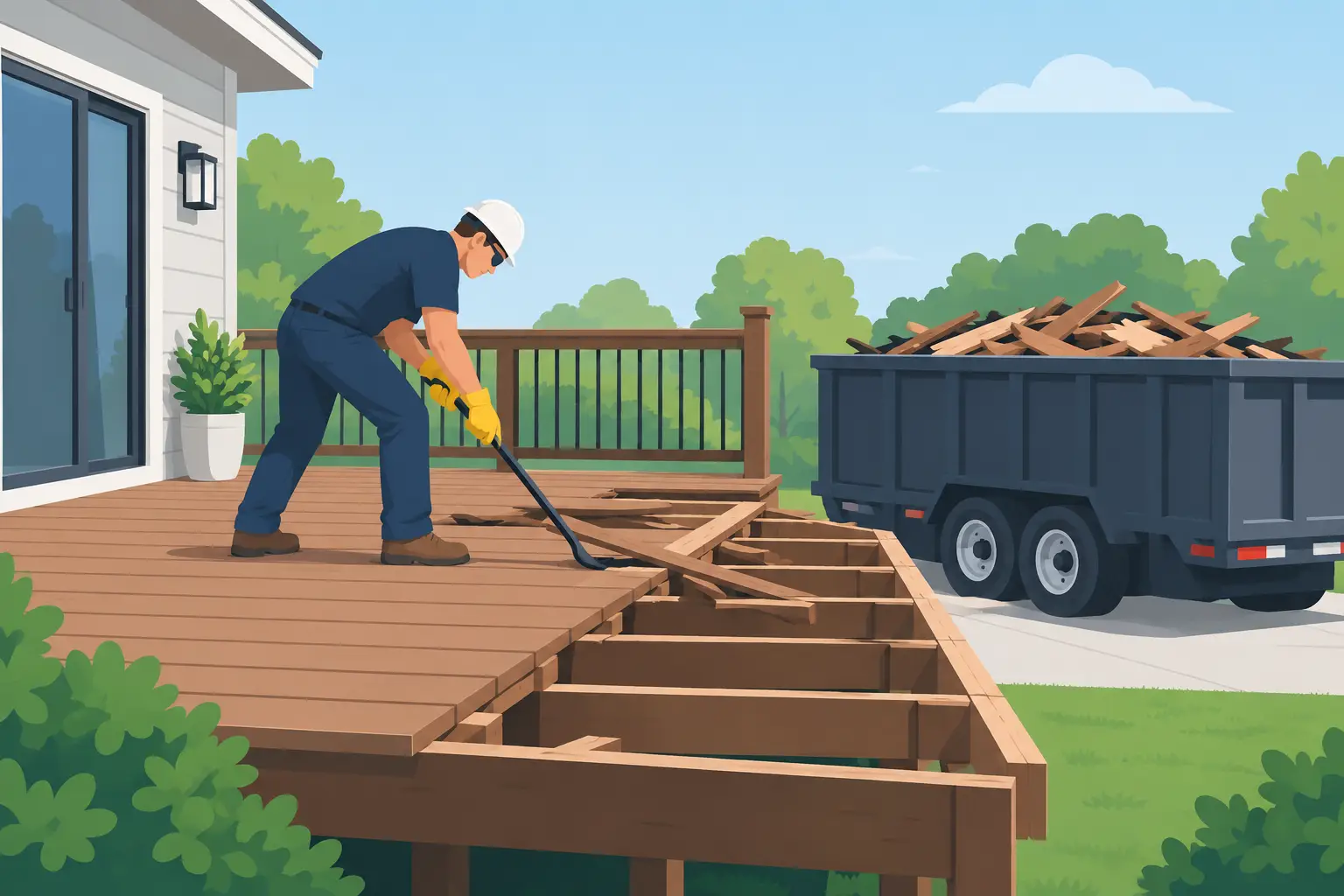
The deck is then dismantled in manageable sections. Railings, stairs, decking boards, framing, posts, and hardware are removed in an order that reduces the risk of shifting material. Depending on the project, the crew may also remove attached benches, planters, skirting, lattice, old lighting, or debris stored beneath the deck.
One detail worth discussing before work begins is the footing. Many decks use concrete footings below grade. Some property owners want the footings removed completely to prepare for a new layout, while others only need the deck structure gone and the yard leveled around the remaining concrete. The better option depends on future construction plans, access, and how much disruption makes sense for the site.
A full-service removal should include loading and hauling the material away, not just tearing it down. Old deck lumber is bulky, often wet or rotten, and usually packed with nails and screws. Leaving it on-site turns one project into a second cleanup job.
Why DIY Deck Tear-Down Can Get Complicated
A low deck may look straightforward, but demolition has a way of revealing problems once work starts. Hidden rot can cause framing to break unexpectedly. Long boards can strike windows, siding, or fences when they are pried loose. Raised decks add fall risks, while buried posts and concrete footings create heavy lifting challenges.
There is also the disposal issue. Pressure-treated lumber should not be burned or casually mixed into a backyard fire pile. Nails, metal brackets, screws, and broken boards need to be sorted and transported safely. If a deck includes composite boards, lighting, wiring, or unusual materials, disposal may require extra planning.
Renting a dumpster or hauling debris yourself can work for some projects, especially if you already have labor, tools, and a clear disposal plan. But it can become expensive and time-consuming when materials take up more space than expected. A professional removal crew brings the labor, loading capability, and hauling capacity together, so you do not have to make repeated trips or handle sharp, heavy debris.
Preparing Your Property for Deck Demolition
A little preparation helps the job move quickly and protects the areas around the work zone. Clear deck furniture, grills, planters, storage bins, and decorations before the crew arrives. If there is a gate or side-yard path used for hauling, make sure it is accessible and let the team know about tight turns, low branches, soft ground, or steps.
Move vehicles away from the loading area when possible. Keep pets indoors and make sure children stay clear of the work zone. If the deck has electrical outlets, lighting, gas connections for a grill, or plumbing features, point them out during the estimate. These details do not necessarily prevent removal, but they should be addressed before demolition begins.
It also helps to decide what you want done with items under the deck. Property owners often find old patio furniture, scrap lumber, toys, storage containers, broken pots, or yard waste that has accumulated out of sight. A full-service junk removal crew can often take care of that material during the same visit, leaving the entire area clean rather than merely exposing another pile.
What Affects the Cost of Deck Removal?
Deck demolition pricing depends on the amount of material, the structure’s design, and the work required to remove it safely. A small ground-level platform with easy access will generally require less labor and hauling than a large second-story deck with stairs, built-in seating, multiple layers, and concrete footings.
Access matters more than people realize. A fenced backyard, narrow side gate, steep lot, or long carry distance can increase labor time. Material type matters too. Heavy composite decking, wet lumber, embedded posts, and large amounts of concrete all change the scope of the project.
The clearest pricing starts with an on-site assessment. Instead of guessing from a photo alone, the crew can see the deck’s condition, confirm access, identify attached features, and explain what is included. Insta Junk Removal provides upfront estimates based on the space materials occupy in the truck and the labor needed for the job. That gives customers a clear understanding before work starts, without hidden fees appearing after the deck is already torn apart.
Responsible Disposal Is Part of a Clean Finish
Demolition creates a mixed load. Wood, metal fasteners, brackets, rail components, concrete, and attached debris do not always belong in the same disposal stream. Responsible handling means sorting materials where practical and directing recyclable or reusable items away from unnecessary landfill disposal.
Not every board can be reused. Rotten, warped, painted, or pressure-treated lumber often has limited options. Still, metal hardware and other recoverable material can be separated, and usable items from the surrounding cleanup may be eligible for donation when their condition allows. The goal is simple: remove what needs to go while making thoughtful decisions about where it goes.
This matters for more than appearances. A yard scattered with nails, broken boards, and old hardware can remain a hazard long after the structure is gone. Careful loading and a final sweep help return the space to a condition where you can plan the next step with confidence.
After the Deck Is Gone, Plan the Space You Want
Once the old deck is removed, take a close look at the newly open area. You may find siding that needs attention, compacted soil, drainage issues, or landscaping that has been hidden for years. This is the right time to address those items before building a replacement structure.
Some property owners install a new deck immediately. Others prefer a ground-level patio, a garden area, a fire pit zone, or simply more open lawn. For landlords and sellers, a clean, hazard-free exterior can make the property easier to show and easier for the next owner or tenant to use.
A worn-out deck does not have to become an overwhelming project. With a clear removal plan, careful work, and complete hauling, the old structure can be out of the way and your outdoor space can finally be ready for its next purpose.