
An old spa can take up an impressive amount of space long after it stops being useful. A professional hot tub removal service gives you a practical way to clear it out without wrestling with an oversized shell, exposed wiring, broken panels, or a difficult path through the yard.
For homeowners, landlords, property managers, and real-estate professionals, removing a hot tub is often part of a bigger project. Maybe the deck needs repairs, a rental property is being turned over, an inherited home is being cleaned out, or a backyard is ready for a new purpose. Whatever comes next, the first job is getting the old hot tub out safely and completely.
Why Hot Tub Removal Is Not a Typical Hauling Job
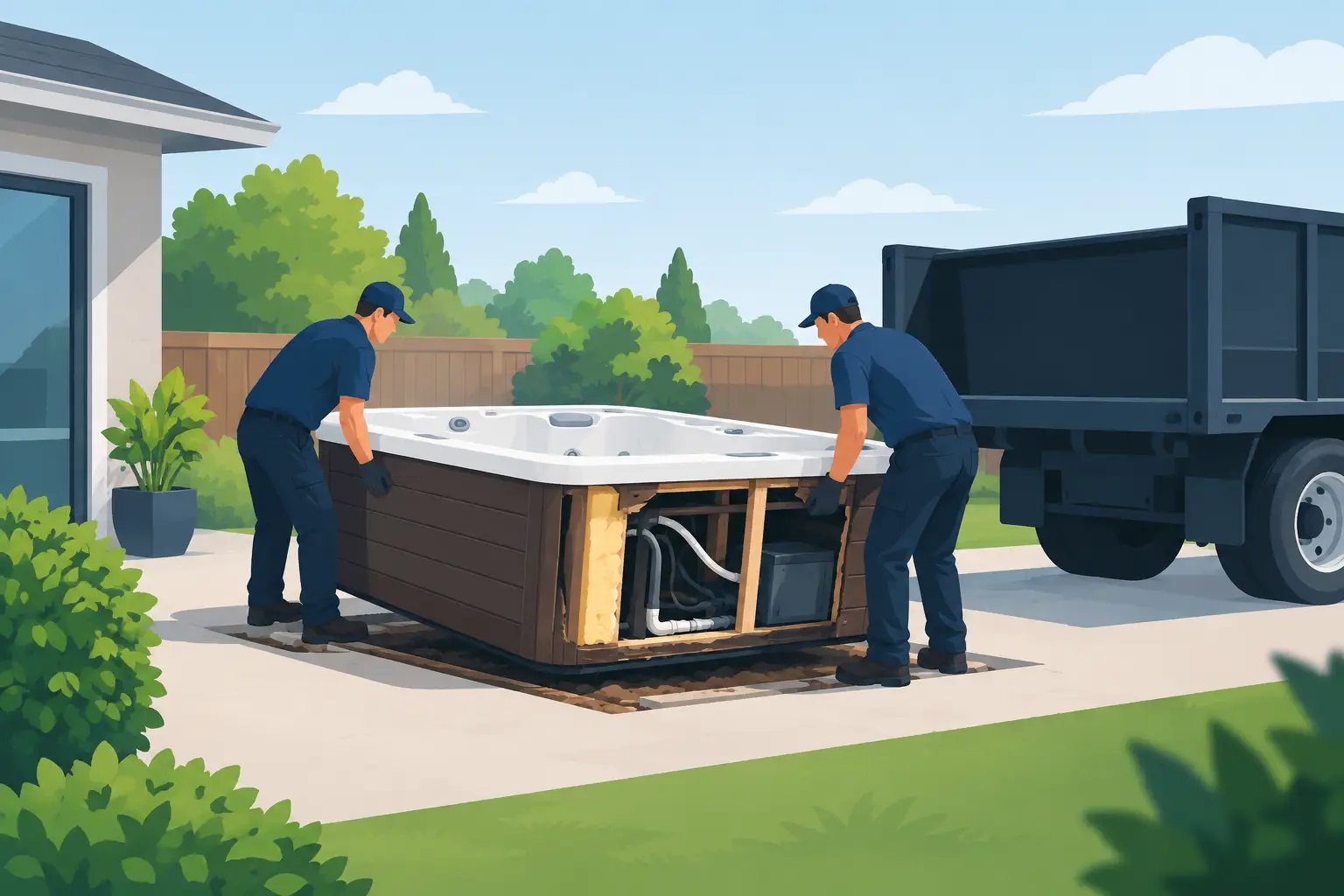
A hot tub may look like one large item, but it is usually a combination of heavy components. The acrylic shell, wood or synthetic cabinet, insulation, pumps, plumbing lines, cover, metal frame, and electrical connections all need to be handled correctly. Older tubs can also be waterlogged, brittle, or structurally weak, making them harder to move than expected.
Trying to drag a spa to the curb can damage a deck, tear up landscaping, scratch siding, or create a safety risk for anyone doing the lifting. Even a small two-person hot tub is awkward. Larger models can weigh several hundred pounds empty, and much more if they have not been properly drained.
A full-service crew brings the labor, equipment, and hauling capacity needed to take on that work. You do not have to recruit friends, rent a trailer, figure out disposal rules, or make repeated trips to a transfer station. The crew handles the heavy lifting while you focus on what you want to do with the reclaimed space.
What a Hot Tub Removal Service Usually Includes
Every property is different, but a professional removal appointment generally begins with an on-site look at the tub, its condition, and the access route. This allows the crew to provide a clear price before work begins and plan the safest approach.
Draining and disconnecting preparation
The hot tub should be fully drained before removal. If it is still connected to power, that connection needs to be safely shut off before anyone starts disassembly or moving. A junk removal crew can assess the situation, but electrical disconnection may require a qualified electrician, especially when hardwired equipment or a dedicated breaker is involved.
Before the crew arrives, remove personal items from the tub and the surrounding area. Store patio furniture, planters, hoses, and decorations that could block the path. Clearing a walkway from the spa to the truck helps the job move faster and protects your belongings.
Dismantling when the tub cannot be moved whole
Some hot tubs have a wide, open route from the backyard to the driveway. In those cases, removal may be straightforward. More often, the spa is behind a fence, built into a deck, tucked under a pergola, or positioned beside landscaping that makes whole-unit removal impractical.
When necessary, the crew can break down the hot tub into manageable sections. This may involve removing the cover, exterior panels, pumps, plumbing, insulation, and frame before cutting the shell into smaller pieces. Targeted dismantling is often the better option because it reduces the chance of damage to fences, gates, decks, and tight outdoor spaces.
If the tub is enclosed by a deck or built into a structure, the project may require light demolition as well. That is a separate consideration from basic hauling, and it should be discussed during the estimate. The goal is to remove only what needs to come out while leaving the rest of the area as protected as possible.
Loading, hauling, and responsible disposal
Once the spa is separated into movable pieces, the crew loads the materials and hauls them away. This is where a full-service company saves the most time. There is no pile of broken panels left at the curb and no bulky debris waiting for you to deal with after the hard part is over.
Hot tubs contain mixed materials, so responsible disposal takes sorting. Metal components, certain electronics, and other recyclable materials may be separated when appropriate. Remaining debris is taken to the proper disposal facility. Insta Junk Removal approaches each load with a focus on recycling, donating, and responsibly disposing of materials whenever possible.
What Affects Hot Tub Removal Pricing?
The right price should be clear before the work begins. Most removal companies consider how much truck space the material occupies, along with the labor required to safely remove it. A small, freestanding spa with easy driveway access will usually be simpler than a large built-in hot tub that needs to be dismantled behind a gated backyard.
The biggest pricing factors are the size and condition of the unit, whether it is already drained, the distance from the truck, stairs or narrow gates, and whether cutting or surrounding-structure removal is needed. A heavy cover, damaged decking, or extensive insulation can also add to the workload.
Be cautious with a vague quote that does not account for access or labor. An honest estimate should reflect the actual project, not just the fact that there is a hot tub on the property. A quick on-site assessment avoids surprises and lets the crew explain the plan before lifting starts.
When It Makes Sense to Schedule Removal
A broken hot tub does not need to sit unused for another season. Scheduling removal is especially useful when a repair would cost more than the spa is worth, the shell is cracked, the equipment leaks, or the unit has become an eyesore and safety concern.
It is also a smart step before listing a property. A nonworking spa can make a deck or patio feel smaller, and buyers may see it as another repair bill. Removing it can make the outdoor area easier to show and give prospective buyers a clearer view of its potential.
Landlords and property managers often benefit from quick removal between tenants. A damaged spa can create liability concerns, collect standing water, and delay outdoor cleanup. For estate cleanouts, the task is often too physically demanding for families already handling many decisions. A dependable crew can take that item off the list in one visit.
How to Prepare for a Smooth Pickup
You do not need to take apart the spa yourself, but a few simple steps can help. Make sure the tub is drained, confirm that electrical power has been disconnected safely, and unlock gates or provide access instructions if you will not be present. If there are low branches, loose stepping stones, pets, or delicate landscaping along the route, point them out before work begins.
If the hot tub is on a deck, let the crew know whether the structure has any soft spots, loose boards, or limited weight capacity. If it is inside a screened enclosure or behind a fence, mention that too. Good information upfront helps the team arrive prepared and prevents delays on removal day.
For properties across Maryland, Delaware, and Virginia, scheduling can often be arranged around a move, renovation, turnover, or outdoor cleanup project. Same-day availability may be possible, but it depends on the crew schedule, access requirements, and the complexity of the job.
Reclaim the Space Without the Heavy Work
Once an old hot tub is gone, the change is immediate. A crowded deck can become an outdoor dining area. A neglected corner of the yard can become open space for kids, pets, gardening, or a future patio project. More importantly, you are not left with the physical strain, trailer rental, or disposal headaches that come with trying to manage it alone.
A courteous removal crew should arrive on time, protect the surrounding space, handle the lifting, and leave you with a clean, clutter-free area. When the spa has reached the end of its useful life, clearing it out is not just another chore – it is a straightforward way to make room for what comes next.