Moving Company Versus Junk Hauler: Who to Call?
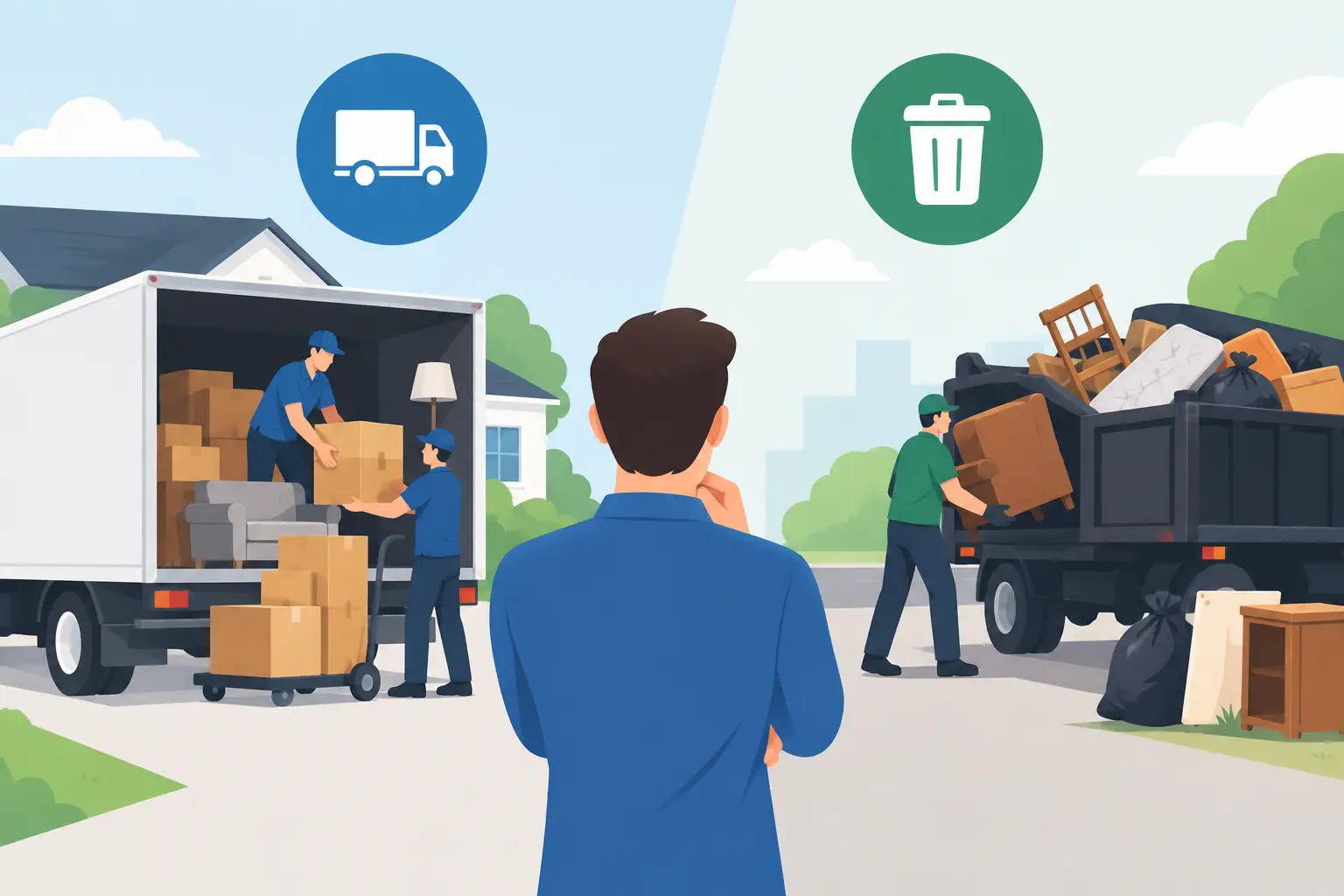
A moving company versus junk hauler decision can affect far more than your schedule. Call the wrong service, and you may pay to transport a broken sectional, a worn-out refrigerator, or boxes you never intended to keep. Call the right one, and you can clear the unwanted items first, make the move lighter, and walk into a cleaner next chapter.
The simple distinction is this: movers relocate belongings you want to keep. Junk haulers remove items you no longer want. But real projects are rarely that simple. A downsizing parent may need both. A landlord turning over a rental may need removal before movers bring in replacement furnishings. A homeowner selling a property may need a fast cleanout before staging begins.
Knowing where each service fits helps you avoid duplicate work, surprise charges, and a garage full of things that followed you for no good reason.
What a Moving Company Is Built to Do
A moving company is designed to transport usable belongings from one location to another. Its crew may pack boxes, wrap furniture, carry items down stairs, load a truck, and unload everything at your new home, office, or storage unit. The goal is preservation. Your dining table, file cabinets, family photos, and working appliances arrive safely at the destination.
That specialty matters when you have valuable, fragile, or needed items. Movers bring the labor and equipment to handle a relocation efficiently, especially when there are multiple rooms, tight hallways, heavy furniture, or a long distance between properties.
Most moving companies work from an inventory of items being transported. Their estimate may depend on the number of movers, truck space, travel time, packing needs, stairs, and distance. If an item is in the home when the crew arrives, they may reasonably assume it is part of the move unless you have clearly identified it otherwise.
Movers can sometimes take a limited number of unwanted items, but that does not make them a junk removal service. Their truck space is reserved for your belongings, and many companies cannot accept items with disposal restrictions, such as certain electronics, chemicals, paint, or old mattresses. Donation runs and landfill disposal can also add time and fees that do not fit their normal workflow.
What a Junk Hauler Is Built to Do
A junk hauler removes unwanted items from where they sit. That can mean a basement packed with old furniture, a garage full of renovation leftovers, an apartment left behind by a former tenant, or a shed that needs to come down before the property can be used again.
The crew does the lifting, loading, sorting, and hauling. You point out what goes, and the team takes ownership of the physically demanding part. A professional junk removal crew should protect floors and walls while working, sweep up accessible debris, and leave you with usable space instead of a pile you still need to deal with.
Junk removal is especially useful for items that do not make sense to move: broken furniture, outdated exercise equipment, damaged cabinets, old carpet, appliances that no longer work, bagged clutter, construction debris, and abandoned office equipment. Depending on the item and local disposal rules, usable materials may be donated or recycled, while the rest is handled through appropriate disposal channels.
Pricing is commonly based on how much space the load takes up, the weight or material involved, and the labor required to remove it. A few boxes by the curb are not the same job as a third-floor apartment cleanout or a pile of wet demolition debris behind a house. Upfront pricing matters because it gives you a clear decision before the work begins.
Moving Company Versus Junk Hauler: The Best Fit
The fastest way to choose is to ask one question: Do I want this item at the next location?
If the answer is yes, it belongs on the moving plan. If the answer is no, it belongs on the removal plan. If you are unsure, decide before either crew arrives. Uncertainty is how unwanted furniture gets moved twice and paid for twice.
Here are common situations where the answer is clear:
- You are moving to a smaller home. Use a junk hauler first for excess furniture, duplicate kitchen items, worn mattresses, and storage-room buildup. Then have movers transport what truly fits your new space.
- You are clearing an estate. Use junk removal for unwanted contents, damaged items, and accumulated household materials after family members have claimed keepsakes. Bring in movers only for the furniture and belongings being kept or delivered to relatives.
- You are renovating. Hire a junk hauler for drywall, old flooring, cabinets, fixtures, and construction debris. Use movers only if you need to relocate furniture temporarily and protect it from the work area.
- You are turning over a rental or office. A junk hauler is usually the better first call for abandoned furniture, broken appliances, old desks, and bagged trash. Movers are useful when usable furnishings are being transferred to another unit or location.
There is also a middle ground. Some projects need both services, and sequencing makes all the difference.
Remove Before You Move When You Can
For most household moves, removing unwanted items before the movers arrive is the practical choice. You reduce the inventory, free up truck space, shorten loading time, and avoid paying to transport items that will only become clutter at the new address.
Start a few weeks ahead if possible. Walk room by room and make three decisions: keep, donate or sell on your own, and remove. Be honest about condition and usefulness. The recliner that has been sitting in a damp garage for two years is not a future project. The boxes you have not opened through three moves probably do not need a fourth ride in a moving truck.
Do not make the mistake of placing every questionable item in the garage for later. That often turns a simple move into a stressful cleanup after closing day. Instead, set unwanted items in one clearly identified area if space allows, or point them out during the removal estimate. Keep all items that are staying separate from the removal area.
For families handling a parent’s move into assisted living or helping after a loss, this order can bring needed breathing room. A careful cleanout lets the family focus on photos, documents, heirlooms, and the belongings that carry real meaning. The heavy furniture, old appliances, and excess household contents can be handled without asking relatives to lift, rent a truck, or make repeated dump runs.
When Movers May Be the Better First Call
There are situations where moving comes first. If a home is being sold and the furniture will be used in a new residence, movers may need to remove the keep items before the remaining property can be assessed. If you are relocating an office, usable desks, computers, and equipment may need to reach the new space before old items can be identified for removal.
Storage is another exception. If you are moving under a tight deadline, movers may transfer your keep items to storage while you decide what stays. Be careful, though. Storage can postpone a decision rather than solve it. Paying monthly to store damaged, outdated, or unwanted belongings can cost more than arranging removal before they go in.
A good rule is to use storage for items with a clear future purpose, not for decisions you are hoping to avoid.
Questions to Ask Before Booking Either Service
Before you schedule, be specific about the job. Ask a moving company whether it handles disposal, how it prices additional items, and whether it can transport appliances or specialty pieces. Ask a junk hauler what materials it can remove, whether labor and loading are included, and how the final price is confirmed.
Photos can help both services give a more accurate estimate. Include staircases, narrow gates, long carry distances, elevator access, and large items such as pianos, refrigerators, sectional sofas, or commercial equipment. Mention anything that may require special handling. Clear information leads to a smoother appointment and fewer surprises.
Also ask about items that typically need separate arrangements. Paint, fuels, chemicals, propane tanks, asbestos-containing materials, and certain hazardous waste cannot simply go in a junk truck. A dependable provider will explain what it can take and what requires another disposal route.
Make the Cleanup Part Easy
Whether you are preparing a home in Salisbury for a move, clearing a beach rental near Ocean City, or turning over a property elsewhere on the Eastern Shore, the best plan is the one that keeps work from piling up on you. Save the movers for belongings worth moving. Use a junk hauler for the things taking up space, creating stress, or standing in the way of the next step.
Insta Junk Removal & Demolition provides free, no-obligation estimates and straightforward removal for homes, rentals, estates, offices, and job sites. You do not lift a finger, and there are no hidden fees to decode after the truck is loaded.
A clean break starts with a clear decision: keep what serves your next space, and let the rest go.
Need junk removed or something demolished?
Free, no-obligation estimates across the Eastern Shore.