Mobile Home Removal Guide for a Clean Start
An empty mobile home can hold up a sale, renovation, rental plan, or a fresh start on the property. This mobile home removal guide lays out the decisions that need to happen before equipment arrives, so the job stays safe, legal, and organized from the first walkthrough to the cleared site.
Mobile home removal is more involved than hauling away old furniture or tearing down a small shed. A home may have a title, utility connections, aging materials, park rules, attached additions, and decades of belongings inside. Taking the time to plan those details protects your property, your budget, and the people doing the work.
Start by choosing removal, relocation, or demolition
The right approach depends on the home's condition and your plans for the land. If the mobile home is structurally sound, current on required paperwork, and can be moved safely, relocation or resale may be worth considering. That option can preserve value, but it also requires transport coordination, route planning, permits, and a suitable destination.
Demolition is usually the practical choice when the home has major water damage, extensive rot, fire damage, unsafe floors, or repairs that cost more than the home is worth. It may also be the better route when a property owner wants the lot ready for a replacement home, new construction, or a clean sale.
Before deciding, walk through the home with a clear eye. Check the roof, floor softness, frame condition, plumbing leaks, and signs of mold or pest damage. Take photos and identify anything that can be sold, donated, recycled, or saved for family. A local professional can inspect the access and condition of the structure, then help clarify what equipment and permits the project may require.
Mobile home removal guide: paperwork comes first
Do not schedule demolition or transport before checking ownership records. In Maryland, Delaware, and Virginia, title requirements, tax status, and local rules can vary by jurisdiction. If the home sits in a mobile home community, the park may also have move-out procedures, contractor requirements, insurance rules, and deadlines.
Gather the title or ownership documents, recent tax information, lot lease details if applicable, and any permits from past additions. An enclosed porch, deck, skirting, carport, or storage shed can change the scope of removal. If the home is part of an estate, confirm who has legal authority to make decisions and sign contracts before work begins.
Call the local permitting office early. Ask whether you need a demolition permit, transport permit, inspection, or proof that utilities have been disconnected. This is not paperwork for paperwork's sake. It helps prevent a stop-work order after crews and equipment are already on site.
Shut off utilities the safe way
Every utility must be properly disconnected before removal work starts. That includes electricity, water, sewer or septic connections, propane, natural gas where present, cable, and phone lines. Never assume a line is inactive because the home has been vacant.
The utility provider or a qualified licensed contractor should handle each disconnection. Get confirmation in writing when possible. If there is a septic system, locate it before heavy equipment enters the lot. Driving over a tank, drain field, or buried line can create an expensive problem that has nothing to do with the home itself.
It is also smart to arrange a utility locate before digging, removing anchors, or pulling out old service lines. Marked utilities give the demolition or transport crew a safer plan for equipment placement and access.
Clear the home before heavy work begins
A mobile home is much easier to remove once it is empty. Start with personal records, photos, heirlooms, medications, firearms, and financial documents. Then separate reusable furniture, appliances, scrap metal, electronics, household trash, and materials that require special handling.
This is often the most emotionally demanding part of the project, especially after an inheritance, eviction, or long-term vacancy. Break it into manageable decisions. Keep what matters, set aside what can help someone else, and let professionals take care of the lifting, loading, and disposal work.
For a full cleanout, make sure closets, cabinets, crawl spaces, exterior storage, and attached rooms are included. Forgotten refrigerators, mattresses, paint cans, tires, and old propane cylinders can slow down the work if they are discovered after a crew arrives. A detailed walkthrough creates a more accurate estimate and fewer day-of surprises.
Identify materials that need special handling
Older mobile homes may contain materials that cannot simply be tossed into a standard dumpster. Suspect materials should be assessed before demolition, particularly if the home was built decades ago or has been remodeled several times.
Potential concerns include asbestos-containing flooring or siding, lead-based paint, mold-damaged materials, fuel tanks, chemicals, and refrigerants inside air conditioners or appliances. If asbestos is suspected, use a qualified inspector or abatement provider before any material is disturbed. Breaking up questionable flooring, insulation, or siding can release hazardous fibers into the air.
Responsible disposal is not just about following rules. It keeps workers, neighbors, and the property safer. Appliances may need refrigerant recovery, scrap metal may be recycled, and usable household goods may have a second life when they are in safe condition.
Plan access, equipment, and the site itself
A removal crew needs room to work. Measure gates, driveways, turns, low branches, overhead wires, and the distance between the home and nearby structures. Wet ground, narrow lanes, and soft shoulders can affect what equipment can enter the property and when the work should be scheduled.
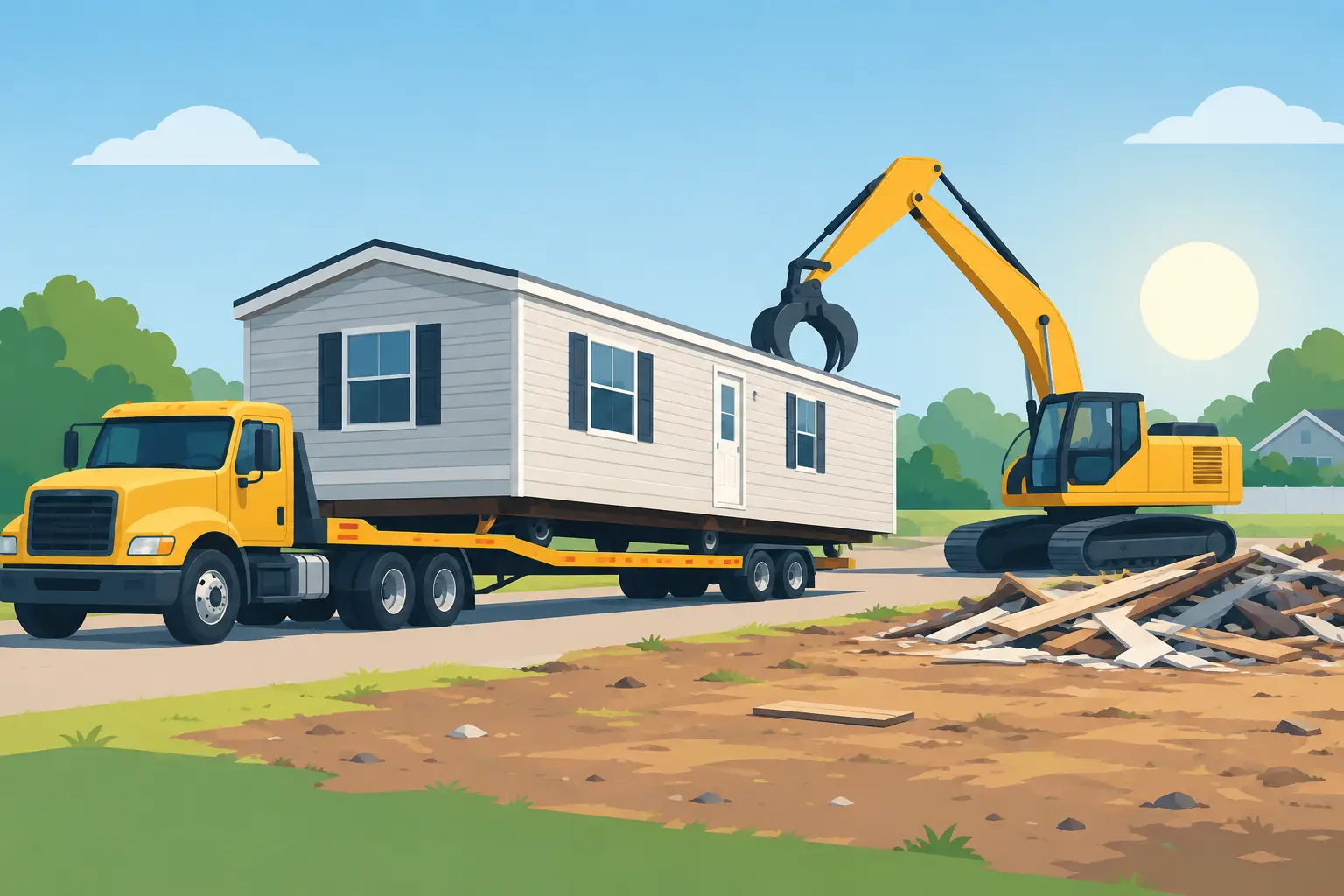
For a move, the home must be prepared for transport, including detaching additions, securing loose components, and evaluating the frame, axles, and hitch. For demolition, the contractor will determine how to bring the structure down, separate materials, load debris, and protect nearby trees, fences, or buildings.
Ask what will happen to the foundation, piers, tie-downs, skirting, steps, porches, and utility pads. “Mobile home removal” can mean different things to different contractors. One quote may cover only the structure, while another includes the contents, add-ons, debris hauling, and final grading. Get the scope in writing so you know exactly what clean means at the end of the project.
Understand what affects the price
There is no honest one-price answer for every mobile home. Cost depends on the size and condition of the home, whether it is moved or demolished, the amount of contents inside, site access, required permits, utility work, hazardous-material handling, and the distance to disposal facilities.
The lowest quote is not always the lowest final cost. An unclear estimate can leave you paying extra for appliances, attached structures, unexpected debris, or site work that was never included. Look for upfront pricing that explains labor, equipment, hauling, disposal, and any conditions that could change the price.
If you are coordinating a property cleanout before demolition, schedule that work first. On the Eastern Shore, a dependable junk removal crew can remove furniture, appliances, bagged debris, and loose household contents before the demolition team takes over. That keeps the site safer and helps the larger project move on schedule.
Leave the lot ready for what comes next
After the structure is gone, inspect the property before signing off. Walk the area for exposed nails, broken glass, metal pieces, utility stubs, and debris around the perimeter. Confirm that the requested foundation removal, backfilling, or grading has been completed if those services were included.
Think ahead to the next use of the land. A future home, garden, parking area, sale listing, or rental setup may need drainage work, soil repair, new utility connections, or a fresh gravel base. Taking care of those details while the site is already open can save time later.
The best mobile home removal projects do not begin with demolition. They begin with clear ownership, safe utility shutoffs, a complete cleanout, and a written plan for the land that remains. Once those pieces are in place, the work feels far less overwhelming and the property is finally ready to move forward.
Need junk removed or something demolished?
Free, no-obligation estimates across the Eastern Shore.