How to Organize Attic Cleanup Without Chaos
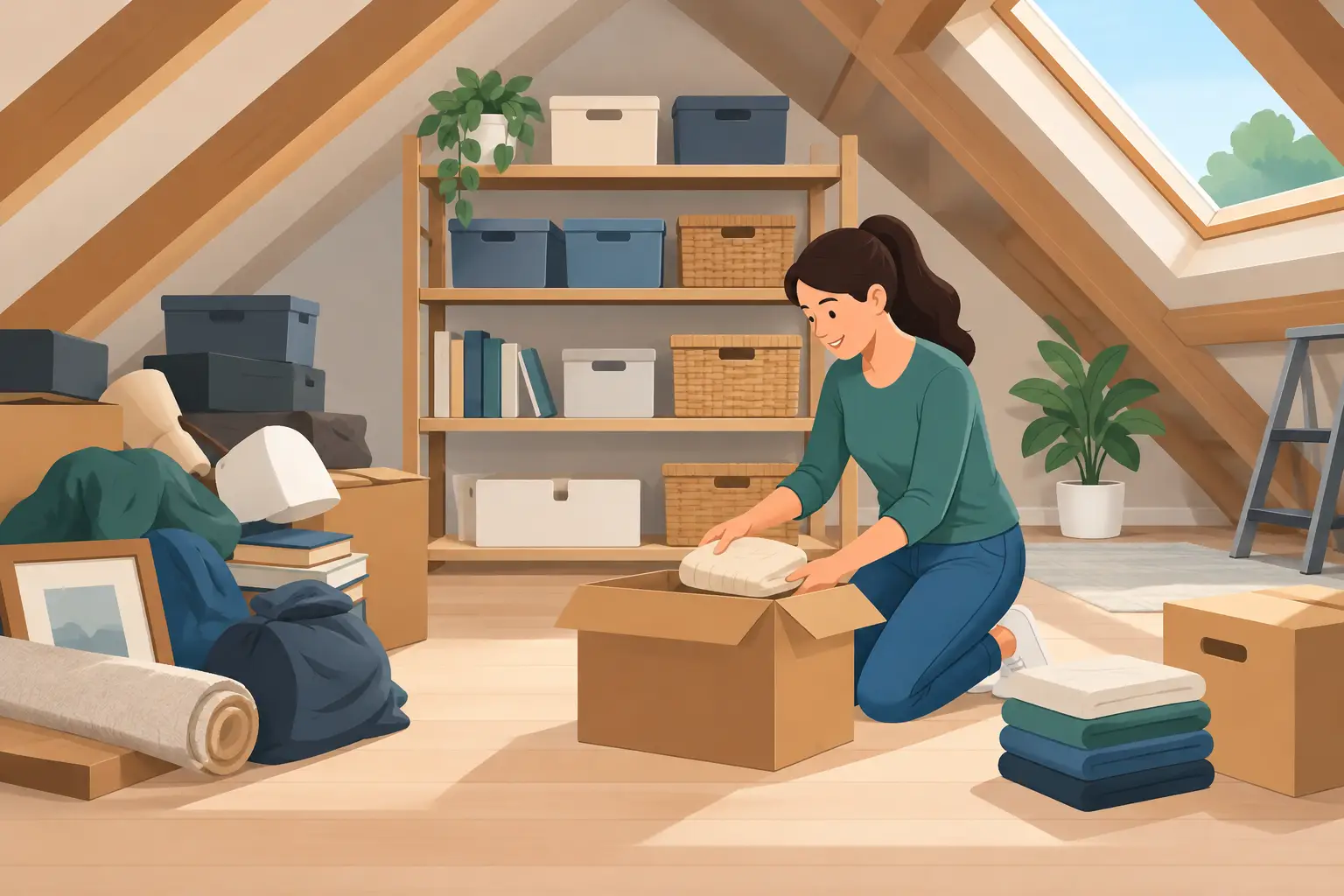
That attic door can stay closed for years because every box seems to come with a decision, a memory, or a question about where it should go. Learning how to organize attic cleanup starts by making the project smaller and safer than it looks. You do not need to empty the whole attic in one exhausting weekend. You need a clear plan, a safe path, and a realistic way to remove what no longer belongs there.
Start With Safety and a Clear Goal
Before carrying down a single tote, take a careful look at the space. Attics can have low ceilings, exposed nails, weak flooring, poor lighting, extreme temperatures, pests, and insulation that makes footing uncertain. Wear closed-toe shoes, work gloves, long sleeves, and a dust mask. Bring a flashlight or work light rather than relying on a single bare bulb.
Only step on framed flooring or boards designed to hold weight. The area between ceiling joists is not a walkway. If the attic is unusually hot, humid, cramped, or dusty, plan short work sessions during the cooler part of the day. A fall, heat exhaustion, or strained back can turn a cleanup project into a much larger problem.
Set a specific goal before you begin. Maybe you need room for holiday decorations, are preparing a home for sale, clearing an inherited property, or finally getting rid of items left behind after a move. A goal helps you avoid the common trap of moving every item from one side of the attic to the other without reducing clutter.
If you see animal droppings, mold, water damage, damaged wiring, or insulation that appears loose and granular, pause the project. Those conditions may require a qualified professional before cleanup can continue.
How to Organize Attic Cleanup One Section at a Time
The fastest way to lose momentum is to pull everything into the center of the attic. Instead, divide the space into manageable zones: one corner, one shelf, one row of boxes, or one side of the access path. Finish that area before moving to the next.
Place four labeled containers or clearly defined piles near the attic entrance: keep, donate, recycle, and remove. A fifth pile for items that need a family member's decision can be useful, but keep it small. If every uncertain item goes into “decide later,” the clutter simply changes location.
As you open a box, make one decision at a time. Keep items that are useful, meaningful, safe to store, and realistically likely to be used again. Donate clean, functional items that someone else can use. Recycle materials that have a proper local recycling route. Remove broken, outdated, water-damaged, incomplete, or unwanted items.
Avoid organizing items you do not actually want. Putting old cords into neat bags, stacking cracked storage bins, or relabeling boxes of unidentified parts may feel productive, but it does not create space. Sort first. Organize only what earns its place.
Use a Simple Decision Test
For household items, ask three direct questions: Have I used this in the last two years? Would I buy it again today? Do I have a safe, practical place for it outside this attic? If the answer is no, it is probably time to let it go.
Sentimental items deserve more care, especially during an estate cleanout or family transition. You do not have to make every emotional decision on the spot. Set aside a single memory box for photos, letters, heirlooms, and items you want to review with relatives. Give yourself a deadline to revisit it. This protects meaningful belongings without allowing nostalgia to take over the entire attic.
Make the Exit Route Easy Before You Haul
Getting items out of an attic is usually harder than sorting them. Measure the attic opening, stairs, hallways, and exterior door before you decide to keep a large dresser, old mattress, appliance, or oversized furniture piece. An item may fit into the attic but not safely fit back out.
Clear the route from the attic access to your driveway or curb. Move rugs, shoes, small furniture, and anything that could become a trip hazard. Use a spotter when carrying awkward items down stairs, and never try to lower heavy objects through a pull-down ladder by yourself.
For larger projects, create a staging area in the garage, driveway, or a dry covered area. Keep donation items separate from the junk pile so usable belongings do not get damaged or accidentally hauled away. If rain is possible, bring down only what can be moved, donated, or disposed of that day.
Heavy lifting has limits. Old televisions, mattresses, filing cabinets, exercise equipment, box springs, and water-damaged furniture can be awkward even when they do not look especially heavy. If an item requires twisting, reaching, or forcing it through a narrow opening, it is a good candidate for professional removal.
Know What Needs Special Handling
Not every attic item belongs in a household trash bin. Paint, chemicals, propane cylinders, automotive fluids, batteries, fluorescent bulbs, and certain electronics may require special disposal. Keep these materials upright, do not combine products, and follow local disposal rules.
Old documents are another category worth slowing down for. Sort paperwork before disposing of it, especially if it could include tax records, medical information, financial statements, property documents, or personal identification. Shred sensitive records you no longer need rather than placing them loose in a trash bag.
Electronics can contain recyclable materials, while usable furniture and household goods may be suitable for donation. Responsible disposal takes a little planning, but it keeps reusable items out of the landfill and prevents improper materials from ending up at the curb.
Clean the Space After the Clutter Is Gone
Once the removal pile is out, sweep up loose dust and small debris. Check for signs of leaks around vents, roof lines, and chimney areas. Look over stored boxes for moisture damage, pest activity, or crushed corners. Catching these issues now can protect the belongings you choose to keep.
Store remaining items in sturdy, labeled plastic bins rather than thin cardboard boxes when possible. Clear labels on two sides make it easier to find decorations, keepsakes, seasonal clothing, or records without opening every container. Keep the heaviest bins close to the attic entrance and on secure flooring, not balanced over unsupported areas.
Leave a clear path through the attic. That simple walkway gives you safe access for future checks and keeps the space from becoming a hidden dumping ground again. A quick review once or twice a year is far easier than another full-scale cleanout.
When It Makes Sense to Call for Removal Help
A do-it-yourself attic cleanup works well when the volume is small, the access is safe, and you have help for carrying items down. It makes less sense when the attic is packed with years of accumulation, you are managing an estate, the items are heavy, or you need the space cleared on a deadline.
For homeowners, landlords, and property managers on the Eastern Shore, Insta Junk Removal can handle the lifting, loading, and hauling after you point out what needs to go. A uniformed crew can remove old furniture, boxes, appliances, broken household items, and general attic clutter while treating your home with care. Upfront pricing and a free estimate mean you know the plan before work begins.
The best attic cleanup plan is the one you can finish safely. Start with one zone, make firm decisions, protect the path out, and get help before a difficult carry becomes a risky one. Soon, the attic can be useful space again instead of a project waiting above your head.
Need junk removed or something demolished?
Free, no-obligation estimates across the Eastern Shore.