Best Tips for Landlord Turnovers That Save Time
A vacant unit costs money every day it sits unfinished. The best tips for landlord turnovers are not about rushing through the work or cutting corners. They are about having a repeatable plan that lets you assess the property quickly, make smart repair decisions, clear out what was left behind, and get the home ready for a qualified new tenant.
For landlords and property managers, the challenge is usually coordination. A tenant moves out, there may be bags in the garage, a damaged appliance in the kitchen, nail holes throughout the unit, and vendors waiting on one another. A clear turnover process keeps a manageable job from becoming a two-week scramble.
Start the turnover before move-out day
The fastest turnovers begin while the current tenant is still in place. Send written move-out instructions well before the lease end date. Be specific about keys, garage remotes, utility transfer dates, cleaning expectations, and the tenant's responsibility for personal belongings and trash.
A pre-move-out walk-through, when appropriate, gives both parties a chance to spot issues early. You may find that the refrigerator needs replacement, the carpet has pet damage, or a shed has become a storage spot for broken furniture and boxes. That information allows you to schedule labor and order materials before the unit is empty.
Keep expectations realistic. Normal wear is different from chargeable damage, and local landlord-tenant rules affect how you document deductions and handle abandoned property. Take dated photos and detailed notes. Good records protect everyone and prevent arguments from slowing down the next lease.
Use one inspection, one scope, and one schedule
Once you regain possession, complete a full inspection before sending workers into the property. Walking through in a random order leads to duplicate trips, missed items, and last-minute surprises. Move room by room, including closets, attic access, storage areas, patios, crawl spaces, and exterior sheds.
Build a simple scope of work as you inspect. Separate immediate health and safety issues from cosmetic improvements. A leaking supply line, missing smoke detector, loose stair rail, or damaged electrical outlet comes first. Fresh paint and upgraded fixtures matter too, but they should not distract from work that affects safety or habitability.
Your schedule should show who is doing what and when. Cleaning should generally happen after dusty repairs and debris removal, while touch-up paint may need to wait until wall repairs are complete. If flooring installers cannot access a room because old furniture is still there, every downstream task is delayed.
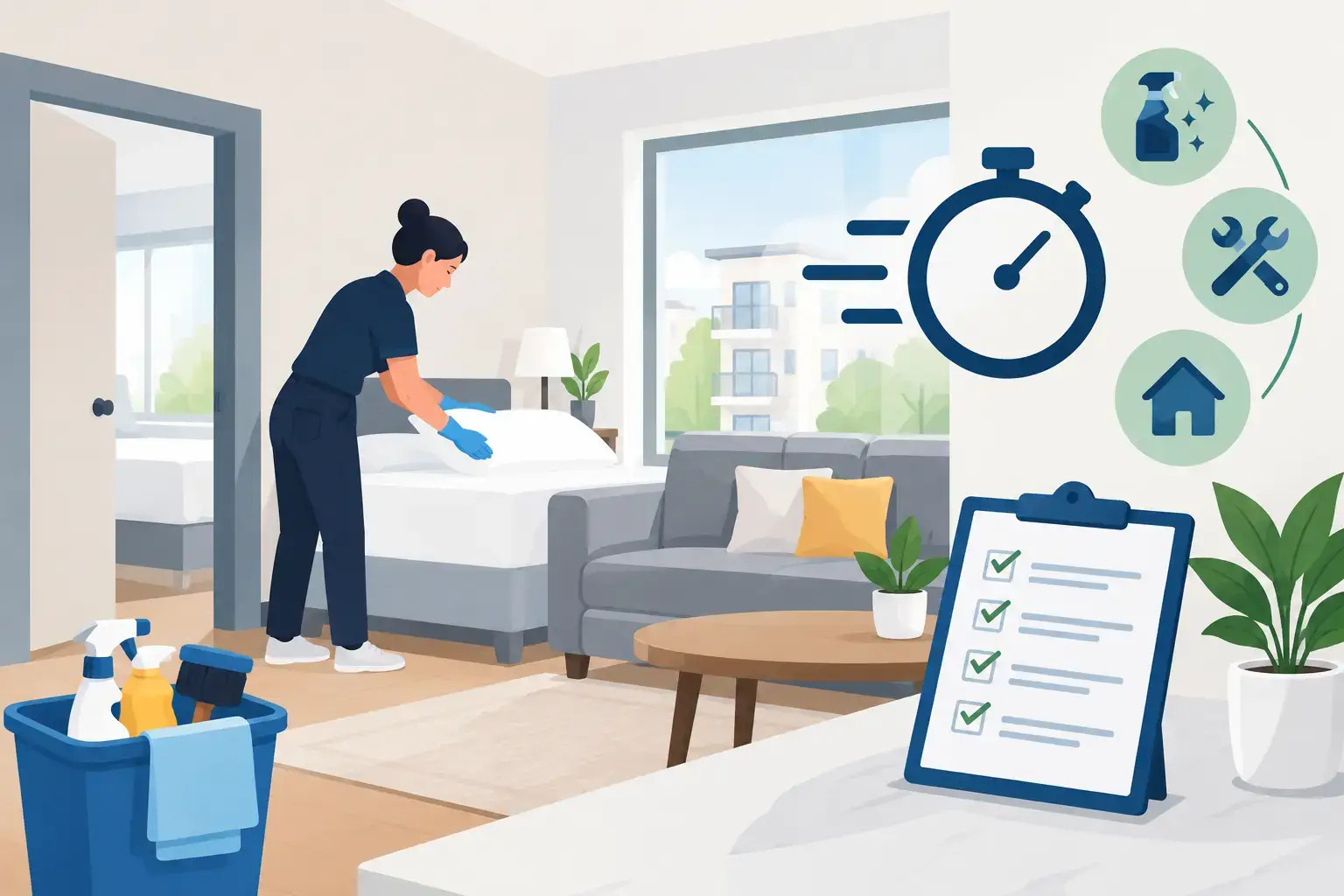
For a standard turnover, your sequence may include these four stages:
- Inspect, photograph, and document the unit condition.
- Remove tenant belongings, trash, old appliances, and damaged materials.
- Complete repairs, maintenance, and any approved upgrades.
- Perform a final deep clean, quality check, and move-in readiness review.
This order can change for a major renovation. For example, if a bathroom demolition is planned, remove everything that needs to go before bringing in new fixtures or cleaners. The goal is to avoid paying for the same room to be cleaned, moved, or accessed twice.
Clear out leftover items quickly and responsibly
Left-behind belongings are one of the most common turnover bottlenecks. A few bags of trash are simple. A full basement, mattress, sectional sofa, broken dresser, old TV, or refrigerator can stop the whole project. Do not let unwanted items become a staging problem that blocks painters, cleaners, or maintenance crews.
First, confirm your legal obligations for handling abandoned property. Requirements vary by location and lease terms, particularly when an item could reasonably be considered valuable. Once you are clear to remove it, schedule removal promptly rather than stacking everything at the curb or moving it from one room to another.
A professional junk removal crew can save valuable time when there is too much for your maintenance team, too much for one pickup truck, or items that require heavy lifting. This is especially useful after evictions, estate transitions, long-term vacancies, and tenant moves where furniture, appliances, bagged trash, construction debris, and outdoor clutter have accumulated.
For Eastern Shore rental owners, Insta Junk Removal handles the lifting, loading, and hauling so your team can keep the turnover moving. Uniformed professionals can remove unwanted items from inside the unit, garage, yard, or shed without asking you to haul bulky pieces to the curb. Ask for upfront pricing and clarify what needs to be removed before the crew arrives, especially if the job includes appliances, mattresses, or demolition debris.
Responsible disposal matters here. Donation, recycling, and proper disposal options depend on the material and its condition. A usable table is different from a broken particleboard dresser, and an old refrigerator may need specialized handling. The practical goal is a clean, empty workspace without creating another disposal problem.
Repair for durability, not just the showing
A quick coat of paint can make a unit look better for a showing, but the best turnover decisions reduce your workload over the next lease term. Focus first on the repairs that tenants will notice every day: doors that stick, dripping faucets, weak exhaust fans, damaged blinds, loose cabinet hardware, and worn caulk around tubs and sinks.
This does not mean every vacancy needs a full remodel. Spending should match the rental's condition, market, and expected return. A clean, well-maintained unit in a competitive area may benefit from replacing visibly worn flooring. In another property, professional cleaning and targeted repairs may be the wiser choice. Avoid making upgrades simply because they are available. Make them because they solve a recurring maintenance issue, protect the property, or improve rentability.
Use durable, easy-to-maintain materials where replacements are necessary. Matching paint colors, standardized light fixtures, consistent locks, and commonly stocked hardware make future repairs faster. Keep a record of product brands, paint formulas, appliance models, and warranty information. The next turnover will go more smoothly when no one has to guess what was installed.
Do not treat cleaning as the final afterthought
Cleaning is often the last major task, but it should be planned from the start. A properly cleaned home helps reveal issues that dirt and clutter can hide, including stained carpet, damaged countertops, pest activity, mildew, and cracked tile.
Set a clear cleaning standard rather than relying on the phrase “broom clean.” Kitchens should be free of grease inside cabinets and appliances. Bathrooms need attention around toilets, tubs, vents, and grout lines. Clean windows, blinds, baseboards, ceiling fans, and closet shelves make a noticeable difference during a showing. Outside, remove litter, old planters, and loose debris from entrances and patios.
Before the final clean, make sure all repairs are complete. Contractors tracking dust through a freshly cleaned unit wastes time and money. If you need to show the property before every detail is finished, be honest about the completion date and keep the route through the unit safe and presentable.
Create a move-in-ready quality check
The final walk-through should be more than a quick glance at clean floors. Test what a new tenant will use on day one. Turn lights on and off, run faucets, flush toilets, check locks, verify smoke and carbon monoxide detectors, inspect window latches, and confirm that appliances are functioning.
Walk the exterior as well. Check address visibility, porch lights, handrails, steps, mailboxes, trash area condition, and any shared entryways. A rental can look excellent inside while an overgrown walkway or a pile of old debris sends the wrong message before a prospect reaches the door.
Take new photos after the work is complete. These photos document condition for the incoming tenant, improve your listing, and give you a useful benchmark for the next move-out. If possible, have someone who was not involved in the repair work do the final review. Fresh eyes catch burned-out bulbs, missed cabinet shelves, and small details that can affect a tenant's first impression.
Best tips for landlord turnovers: build a system you can repeat
The most effective turnover system is not necessarily the most complicated one. It is the one your team can use every time. Keep a standard inspection form, a list of dependable vendors, a defined cleaning standard, and a clear process for approving repairs and hauling away unwanted items.
Track how long each turnover takes and where delays occur. If junk removal repeatedly holds up painters, schedule it earlier. If maintenance keeps waiting for replacement parts, stock common items or order them at inspection. If cleaning quality varies, use a room-by-room checklist and inspect before releasing payment.
A well-run turnover protects your property, keeps vacancy days down, and gives the next tenant confidence from the moment they walk in. Clear the space, finish the details, and hand over a home that feels cared for.
Need junk removed or something demolished?
Free, no-obligation estimates across the Eastern Shore.